Why cultural understanding may be the next frontier of peace
- The ASEAN Way — built around non-intervention, respect for sovereignty and dialogue — offers a model for navigating great-power rivalry
- Penang’s centuries-old mixture of cultures, religions, languages, food and commerce demonstrates how civilisational interaction can become part of everyday life
- China’s philosophical heritage, particularly Confucian ideas of balance and harmony, could contribute to a more pluralistic international order
By Lin Siu-loong
THE struggle for influence in the 21st century is increasingly being fought not only over territory, technology and trade, but also over competing ideas of civilisation. As the world becomes more multipolar, old assumptions about a single dominant model of modernity are being challenged.
At the same time, cultural misunderstandings, nationalism and geopolitical rivalry risk turning differences between societies into sources of conflict. The ongoing crisis in the Middle East, for instance, is driven in significant part by deeply entrenched worldviews that perceive the other as an “enemy”.
For Dr Peter TC Chang, the answer is not to eliminate those differences, but to learn how to live with them. That is why he sees intercultural dialogue as more than diplomatic courtesy. It is becoming a strategic necessity.
Cultural understanding as strategic necessity
“When leaders operate from distorted religious or ideological worldviews, they risk framing others as existential threats,” Chang says. This is why cultural understanding matters.
In an increasingly multipolar world, different powers and civilisations will inevitably possess competing interests, historical memories and values. Understanding those differences does not require agreement. It requires recognising that other societies may see the world through historically and culturally different lenses. Such understanding can create space for empathy, dialogue and the discovery of common ground.
Peace and prosperity are among the most obvious shared aspirations. Human dignity is another. But Chang cautions that cultural understanding alone cannot resolve conflicts rooted in material interests or strategic competition. It can, however, prevent those differences from being magnified by mutual suspicion and dehumanisation.
“As the world moves toward a more multipolar order,” he argues, “cultural understanding must be seen not as a soft add-on to diplomacy, but as a strategic necessity.”
ASEAN and the power of the middle ground
Few regions illustrate this challenge better than Southeast Asia. ASEAN brings together Buddhist, Muslim, Christian and other cultural traditions, as well as countries with very different political and economic systems. Unlike a region built around a single cultural or religious heritage, ASEAN’s diversity has required a different approach.
Chang believes the answer lies in what is commonly known as the ASEAN Way. Its emphasis on sovereignty, non-intervention, consensus and dialogue has enabled countries with significant differences to coexist and cooperate.
This also explains ASEAN’s preference for strategic autonomy amid competition between the US and China.
Rather than taking sides, ASEAN members generally seek constructive relationships with all major powers. This approach rests on a fundamental assumption: differences in ideology or political systems need not make countries permanent enemies.
“All peoples, regardless of ideology, are essentially worthy of respect and should be treated as potential friends rather than foes,” Chang says. For him, this is not simply diplomatic pragmatism. It reflects a deeper cultural commitment to coexistence.
Dialogue in everyday life
Against this regional backdrop, Penang offers a particularly compelling example. For centuries, the island has been a meeting point for Chinese, Malay, Indian, European and other communities, as well as different religious traditions.
Its identity has emerged not from one civilisation replacing another, but from their interaction. For Chang, this offers an important lesson. Civilisational dialogue does not have to take place only in conference halls or through philosophical debates. It happens through food, commerce, festivals, neighbourhoods, language, art and shared public spaces.
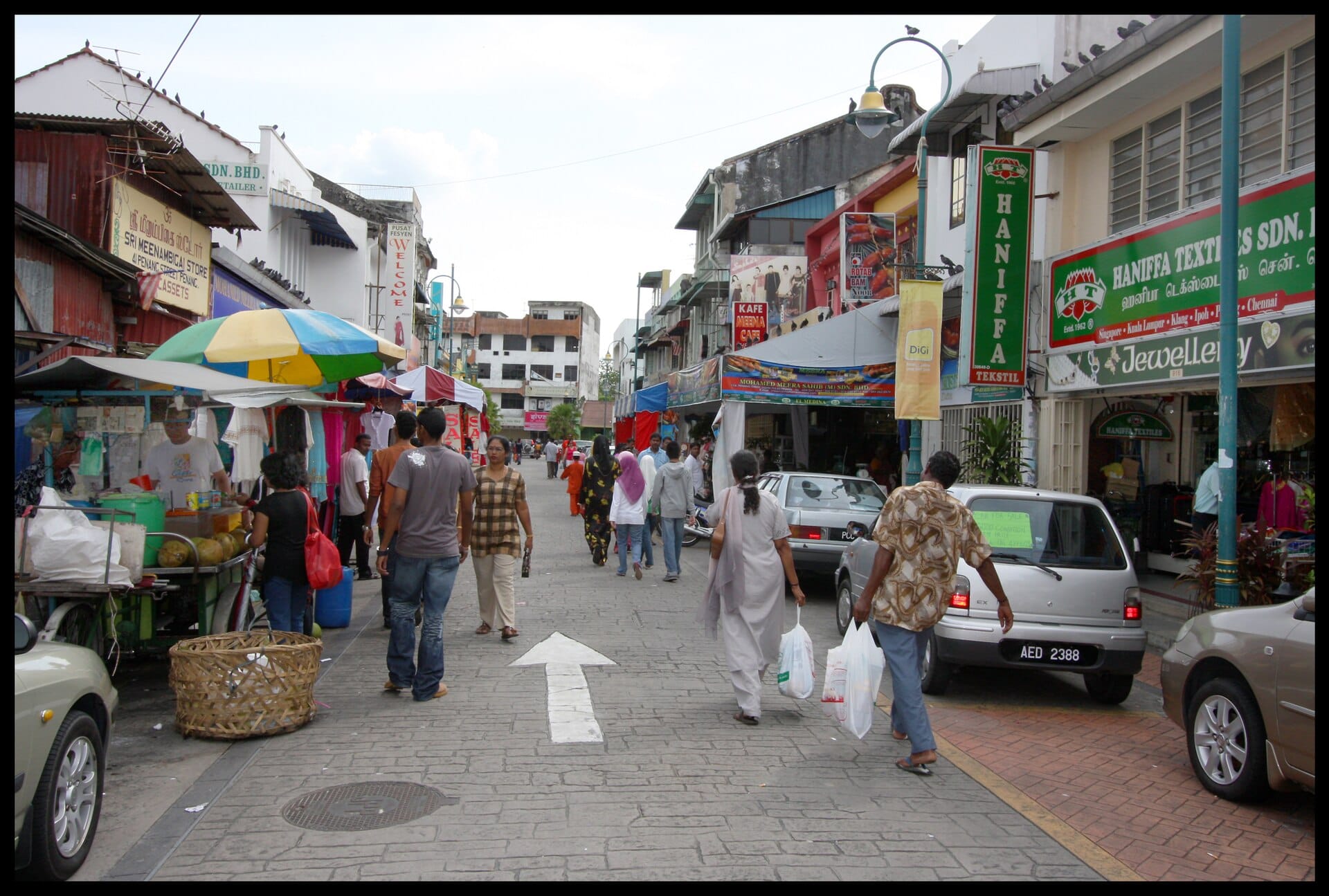
“Common ground is often discovered not through intellectual contestation over civilisational superiority, but through the mundane yet profound experience of living and working alongside one another,” Chang says.
But he cautions against romanticising multiculturalism. Differences can generate tension. Coexistence requires institutions, mutual respect and a willingness to accommodate others. That, in fact, may be Penang’s most valuable lesson.
Civilisational dialogue is not about erasing differences. It is about developing the capacity to live productively with them. Penang, therefore, becomes, in Chang’s words, a kind of “laboratory” for a more pluralistic world order — showing that different civilisations can interact and create something new together.
Why the Penang Peace Dialogue matters
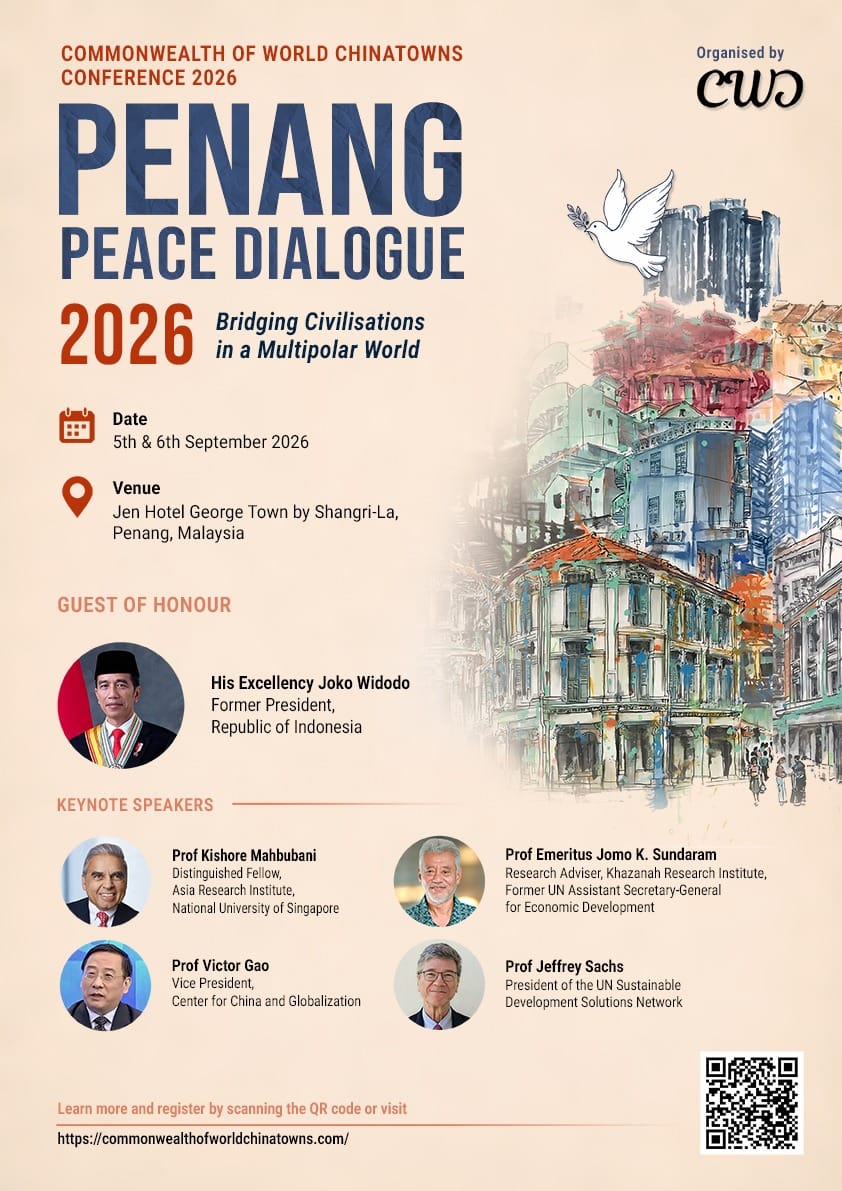
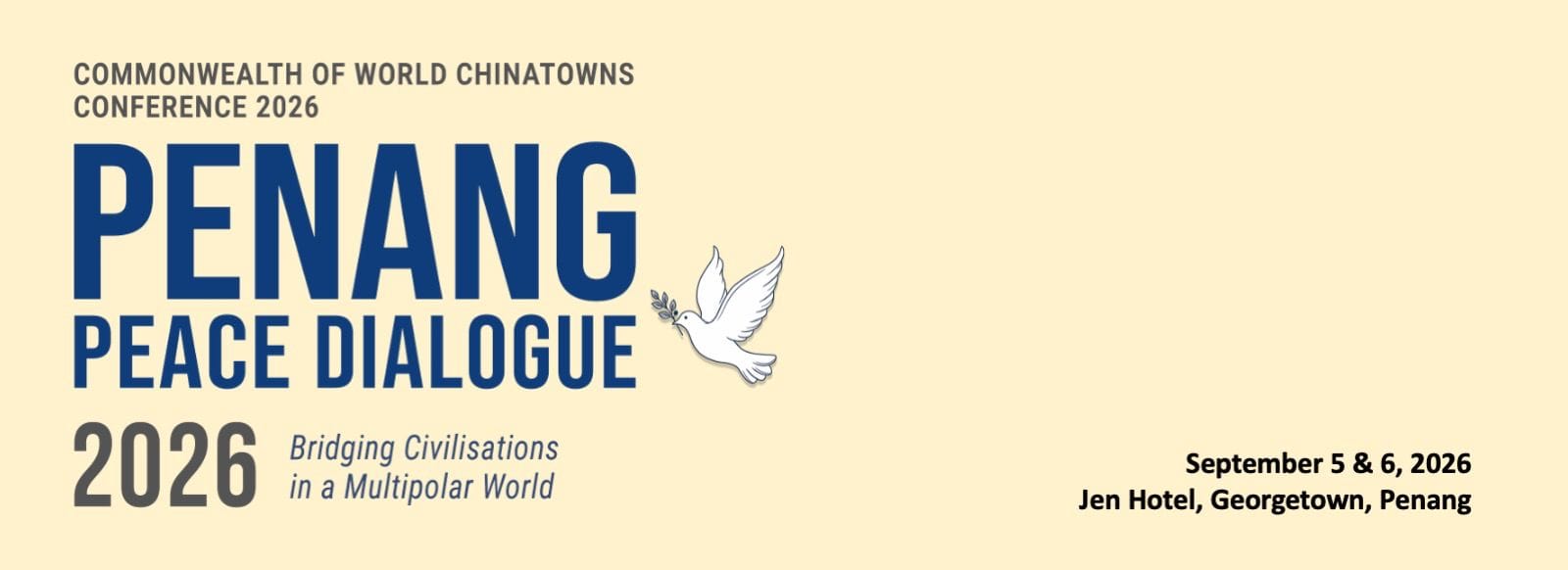
It is against this backdrop that Chang views the inaugural Penang Peace Dialogue, themed “Bridging Civilisations in a Multipolar World” as relevant and timely. At a time of rising ethno-religious nationalism and civilisational confrontation, he sees the initiative as an important counter-response.
The 21st century, he argues, is moving beyond the predominantly Western-centric order of the previous century towards a world that is both multipolar and multi-civilisational. Different cultural traditions, historical experiences and value systems are demanding recognition.
The Penang Peace Dialogue can provide a space to explore those differences through conversation rather than confrontation. Chang sees a natural connection with broader efforts such as the Global Civilisation Initiative, promoted by Xi and supported by Prime Minister Anwar Ibrahim. Both initiatives share a common vision: building bridges between civilisations as forces of division and polarisation gain ground.
Civilisational dialogue is not about erasing differences. It is about developing the capacity to live productively with them. The Penang Peace Dialogue can provide a space where those differences are explored through conversation rather than confrontation.
Such initiatives matter because they create spaces for dialogue that transcend diplomatic protocols and official state narratives. They bring together scholars, policymakers, religious leaders, and civil society actors in settings that encourage genuine exchange. But he also stresses realism.
“Peace dialogues alone cannot resolve deep-seated geopolitical conflicts or material rivalries,” he adds. Their value lies elsewhere. They can change mindsets, build relationships, and foster trust. “The Penang Peace Dialogue is not a solution in itself,” Chang says, “but an essential part of the solution.”
A common ethic: hospitality
As a comparative philosopher of religion, Chang believes the world nevertheless possesses a potential ethical foundation for cooperation. Interestingly, he turns to Christopher Nolan’s recent film, The Odyssey, where Nolan invokes the ancient Greek concept of xenia — the sacred obligation of hospitality and respect towards strangers. Its underlying message is remarkably contemporary: the stranger is not simply an enemy or outsider, but another human being whose dignity must be recognised.
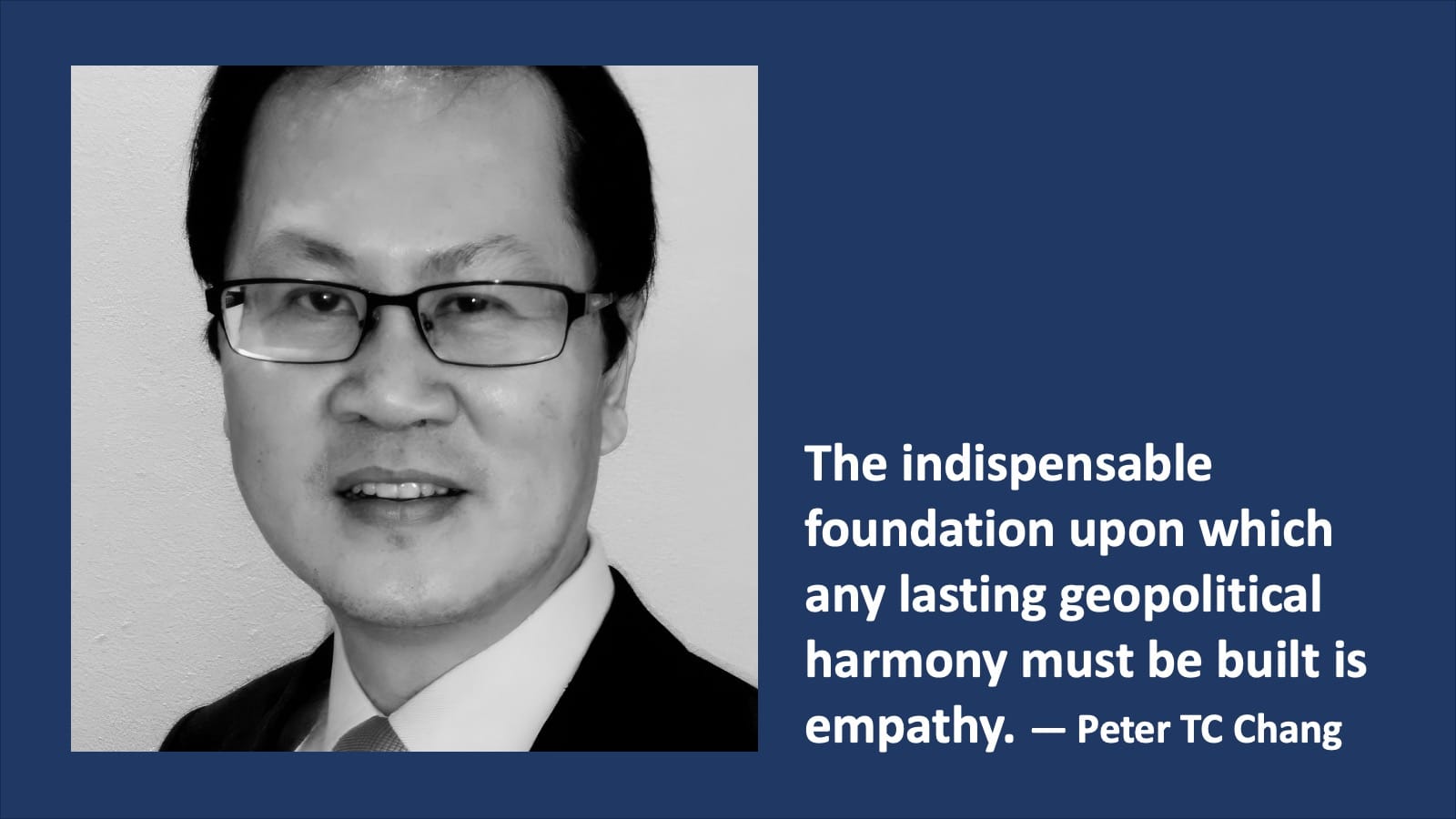
For Chang, this capacity to recognise others’ humanity is indispensable. Military power may win battles, but a civilisation that achieves victory through dehumanisation risks destroying something within itself. “The indispensable foundation upon which any lasting geopolitical harmony must be built,” he argues, “is empathy.”
A pluralistic future
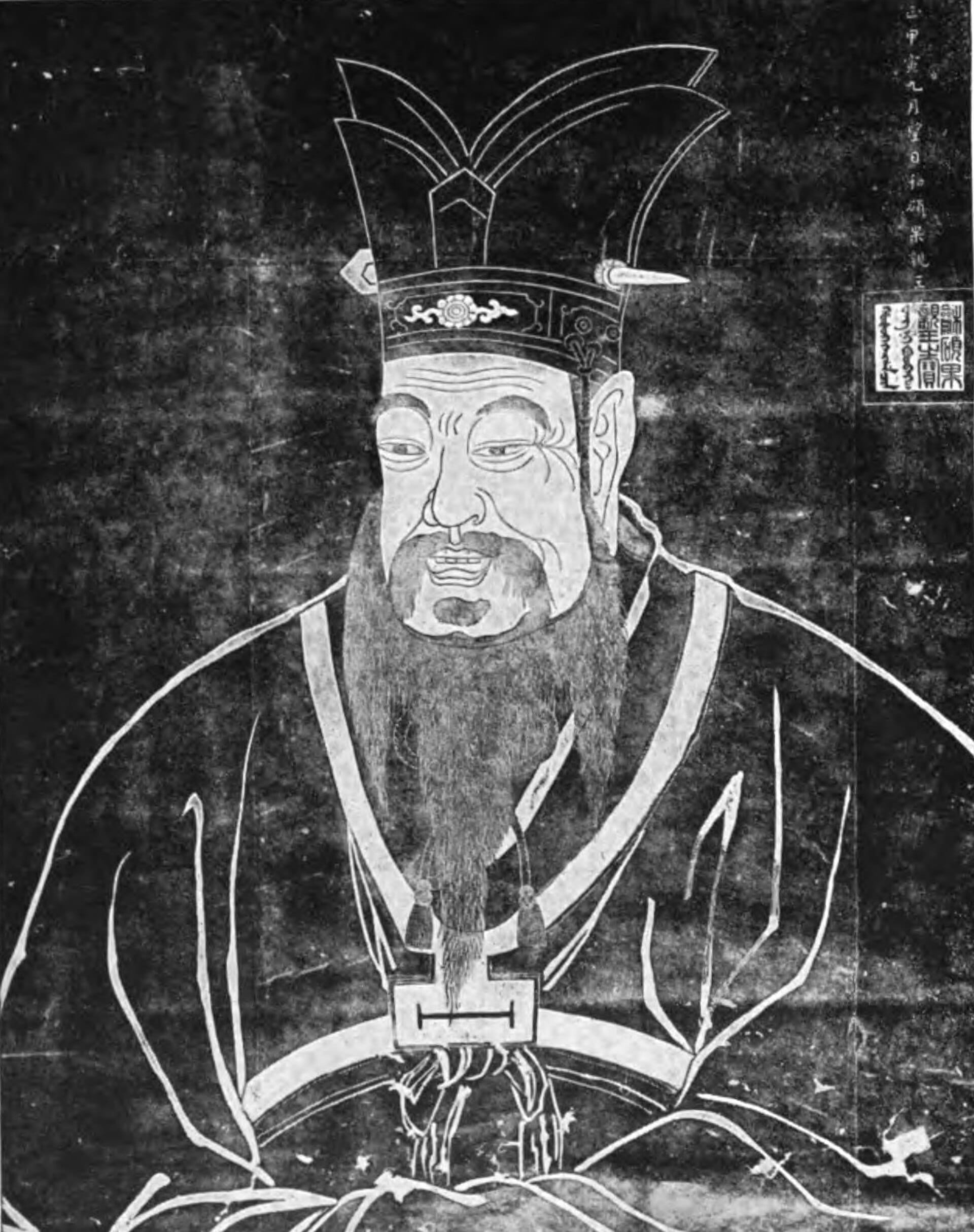
Looking ahead two decades, Chang expects China’s civilisational identity to play an increasingly significant role in how it understands its place in the world. He does not envisage a simple return to the past. Instead, he sees a selective and creative retrieval of China’s philosophical heritage. Confucian ideas of relational ethics, moral governance and social harmony could become part of the intellectual vocabulary through which China articulates its defining international vision.
One particularly important concept is he er bu tong — “harmony without uniformity.” The principle suggests that harmony does not require everyone to become the same. Applied internationally, it offers a vision in which different civilisations can retain their distinct identities while cooperating where their interests overlap. This, Chang believes, could become increasingly important as the world moves away from a single dominant model.
Nature, technology and the human future
The ecological crisis offers another area where China’s philosophical traditions could have a role. The Daoist and Neo-Confucian concept of tianren heyi, or the unity of humanity and Heaven, presents human beings as part of a larger natural order.
Rather than treating nature simply as something to be conquered or exploited, it encourages a relationship based on balance. Chang expects this philosophy to reinforce China’s commitment to green and sustainable development.

Artificial intelligence presents an even more immediate test. As AI becomes increasingly powerful, societies will have to determine not only what machines can do, but what they should be allowed to do.
Here Chang sees value in the Confucian emphasis on human dignity. Technology must serve humanity rather than diminish it. The challenge, therefore, is not to resist AI, but to learn how human beings can coexist with increasingly intelligent technologies while preserving the qualities that make human life meaningful.
Hope in a pluralistic world
Asked what gives him the greatest hope for stronger intercultural dialogue, Chang points to the gradual shift away from a predominantly Western-centric worldview toward a more pluralistic, East-inclusive perspective. He contrasts an older tendency to frame questions in binaries—right or wrong, saved or damned, good or evil—with traditions that allow multiple pathways to the good. Chinese philosophy, he argues, offers a different metaphor: yin and yang. Opposing forces do not necessarily have to destroy one another. They can be complementary elements of a larger whole.
In a world increasingly divided by competing identities, systems and civilisations, the wisdom of the middle path is not about choosing either side. It is about recognising that a sustainable future may depend on finding ways for different sides to coexist.
“If more societies embrace pluralism not as a threat but as a resource,” he says, “then intercultural dialogue will no longer be a diplomatic nicety but a practical necessity.” For Chang, that is a profound source of hope.
Message for young Malaysians
His final message is perhaps the simplest — and potentially the most relevant. “The enduring strength of Confucian civilisation lies in its commitment to the middle pathway,” Chang shares.
For more than five millennia, he argues, Chinese civilisation has cycled through war and peace, prosperity and hardship, rise and decline. Its survival, in his view, has repeatedly depended on finding balance rather than embracing extremes. This is particularly relevant as humanity enters the age of artificial intelligence.
The temptation will be to respond to technological change with either uncritical enthusiasm or paralysing fear. The middle path offers another possibility: remain grounded, respond rather than react, and approach transformation with clarity rather than haste.
For young Malaysians, growing up in one of the world's most diverse societies, China’s civilisational heritage need not be treated as a set of fixed answers. Its deeper lesson may be an attitude of openness to difference and change.
In a world increasingly divided by competing identities, systems and civilisations, the wisdom of the middle path is not about choosing either side. It is about recognising that a sustainable future may depend on finding ways for different sides to coexist. And perhaps that is the larger significance of Penang’s experiment in multicultural living — and of dialogues such as the Penang Peace Dialogue. The future may not belong to one civilisation defeating another. It may belong to civilisations learning how to live, learn and build together.
For more information on the Penang Peace Dialogue, click here to visit the official website. Click here to check out the Postscript NAC story, Penang Peace Dialogue: Bridging civilisations in a multipolar world