

- Neutrality with humility – Why credibility in peace-building begins with restraint, listening, and moral modesty.
- Penang as a bridge – How history, geography, and civic culture position Penang and Malaysia as conveners rather than arbiters.
- Creative realism in peace-building – Moving beyond slogans to practical dialogue in an era defined by violence and fragmentation.
By Lin Siu-loong
IN AN AGE marked by grinding wars, polarised politics, and the rapid erosion of trust between societies, the language of peace can sometimes sound hollow. These reflections emerged during an interview with Dr Pascal Lottaz of Kyoto University, whose work on neutrality and peace studies offers a timely lens on the role smaller states and cities can play in today’s conflicts.
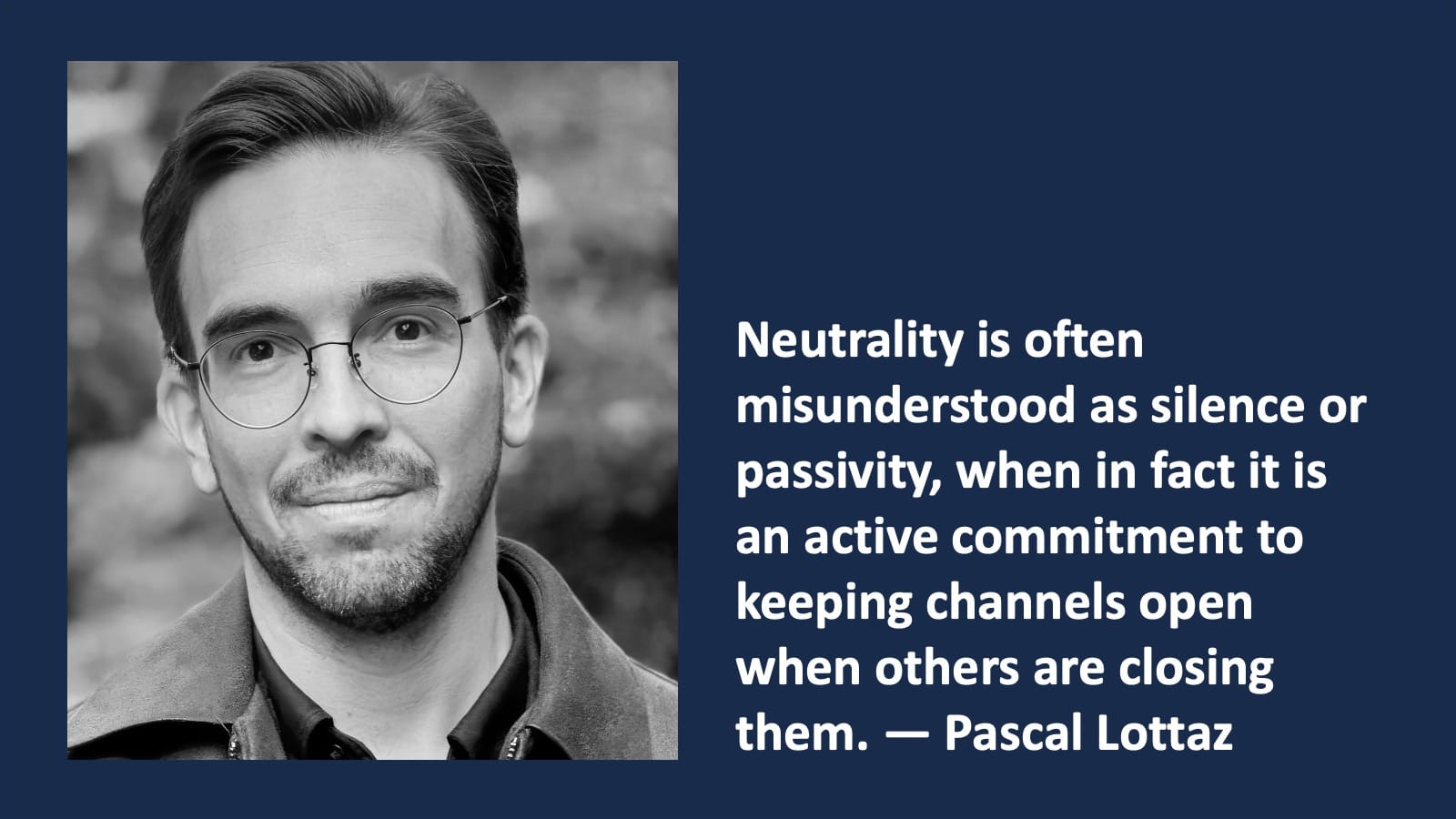
As Lottaz observed, “Neutrality is often misunderstood as silence or passivity, when in fact it is an active commitment to keeping channels open when others are closing them.” Declarations are made, conferences convened, communiqués released—yet violence persists, often intensifying rather than receding. Against this backdrop, the idea that peace-building should be grounded in neutrality and humbleness may appear understated, even unfashionable. But it is precisely this restraint that allows dialogue to function as a bridge rather than a battleground.
The aspiration that Penang and Malaysia more broadly can serve as such a bridge reflects a deeply pragmatic understanding of peace work. It does not claim moral superiority or geopolitical leverage. Instead, it recognises that credibility in peace dialogue comes from the ability to host, listen, and facilitate without imposing outcomes. In violent times, this role may not make headlines, but it can quietly shape possibilities.
Neutrality and humility create the right conditions
Neutrality, in this sense, is not indifference. Nor is it an abdication of values. Rather, it is a disciplined posture—an agreement to hold space for multiple narratives, including those that are uncomfortable or contradictory. Humbleness complements this posture by acknowledging the limits of one’s own understanding. Together, neutrality and humility create the conditions in which adversaries might speak without feeling cornered or judged.
“If a mediator arrives convinced they already know the solution,” Lottaz cautioned, “dialogue quickly turns into instruction. Peace processes fail most often not because people disagree, but because they stop listening.”
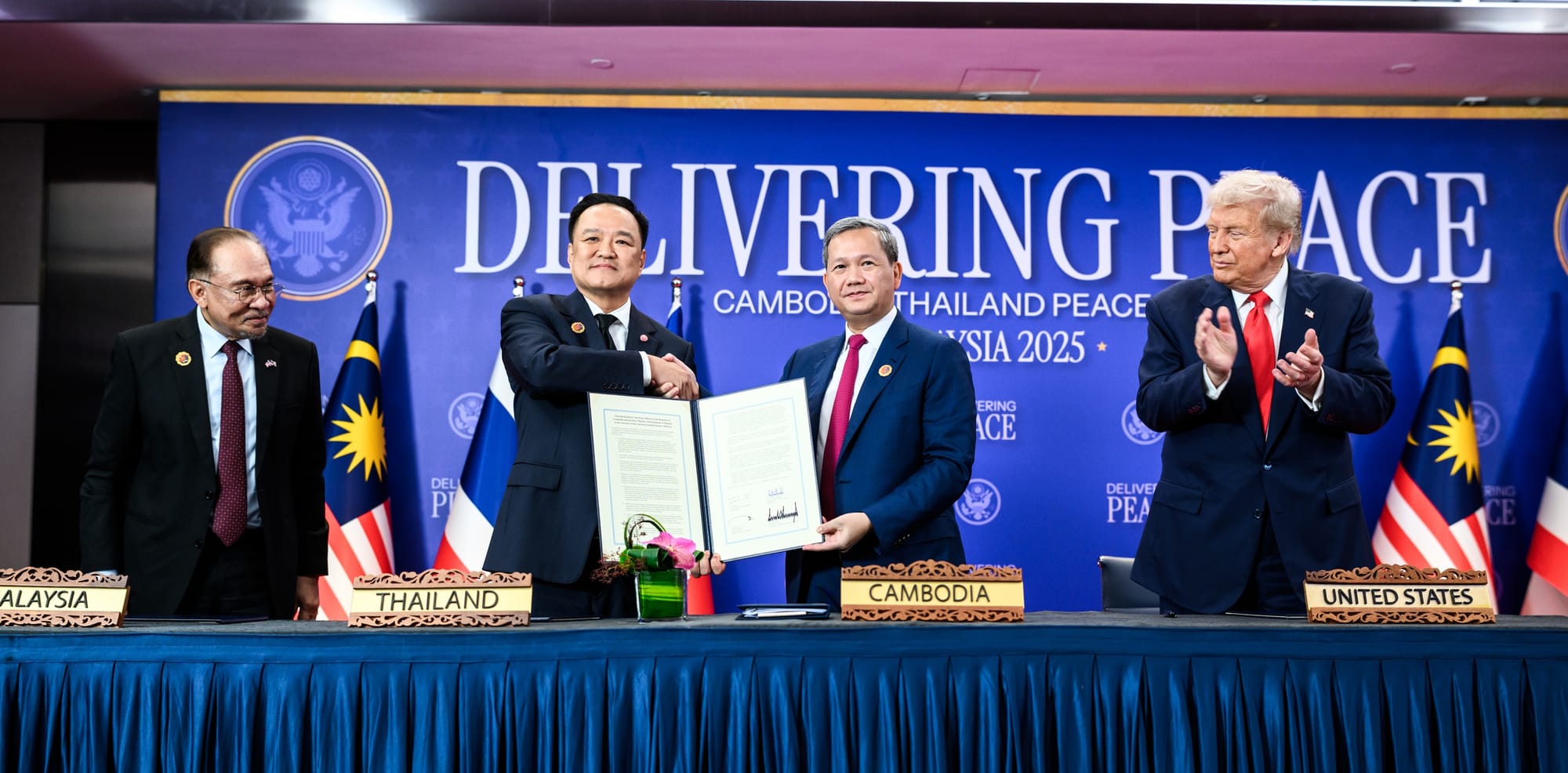
Malaysia’s historical positioning lends weight to this approach. As a nation shaped by trade routes, migration, and cultural exchange, it has long functioned as an intermediary space—neither fully aligned with any single civilisational bloc nor isolated from global currents.
Penang, in particular, embodies this legacy. Lottaz pointed out that “places shaped by trade and coexistence develop an instinct for negotiation. They understand that living together is not about winning arguments, but about managing differences over time.”
For centuries, Penang has been a port of encounter, where merchants, scholars, and communities negotiated coexistence not through uniformity, but through daily acts of accommodation.
Right environments for meaningful negotiation
This heritage matters. Peace dialogue is not merely about formal meetings between elites; it is also about civic habits. Places accustomed to pluralism are often better equipped to host conversations across divides. In Penang, difference is not an abstract concept—it is a lived reality. Mosques, temples, churches, and shrines exist within walking distance of one another. Languages overlap. Histories intersect. Such environments cultivate a kind of social muscle memory for negotiation.
Yet hosting dialogue is only the beginning. The deeper challenge lies in contributing to what might be called creative realism in peace-building. In today’s conflicts, simplistic solutions are quickly exposed as inadequate. Calls for immediate reconciliation may ring false when communities are traumatised and trust has collapsed. At the same time, purely technocratic approaches—focused solely on ceasefires or power-sharing formulas—often fail to address underlying grievances.
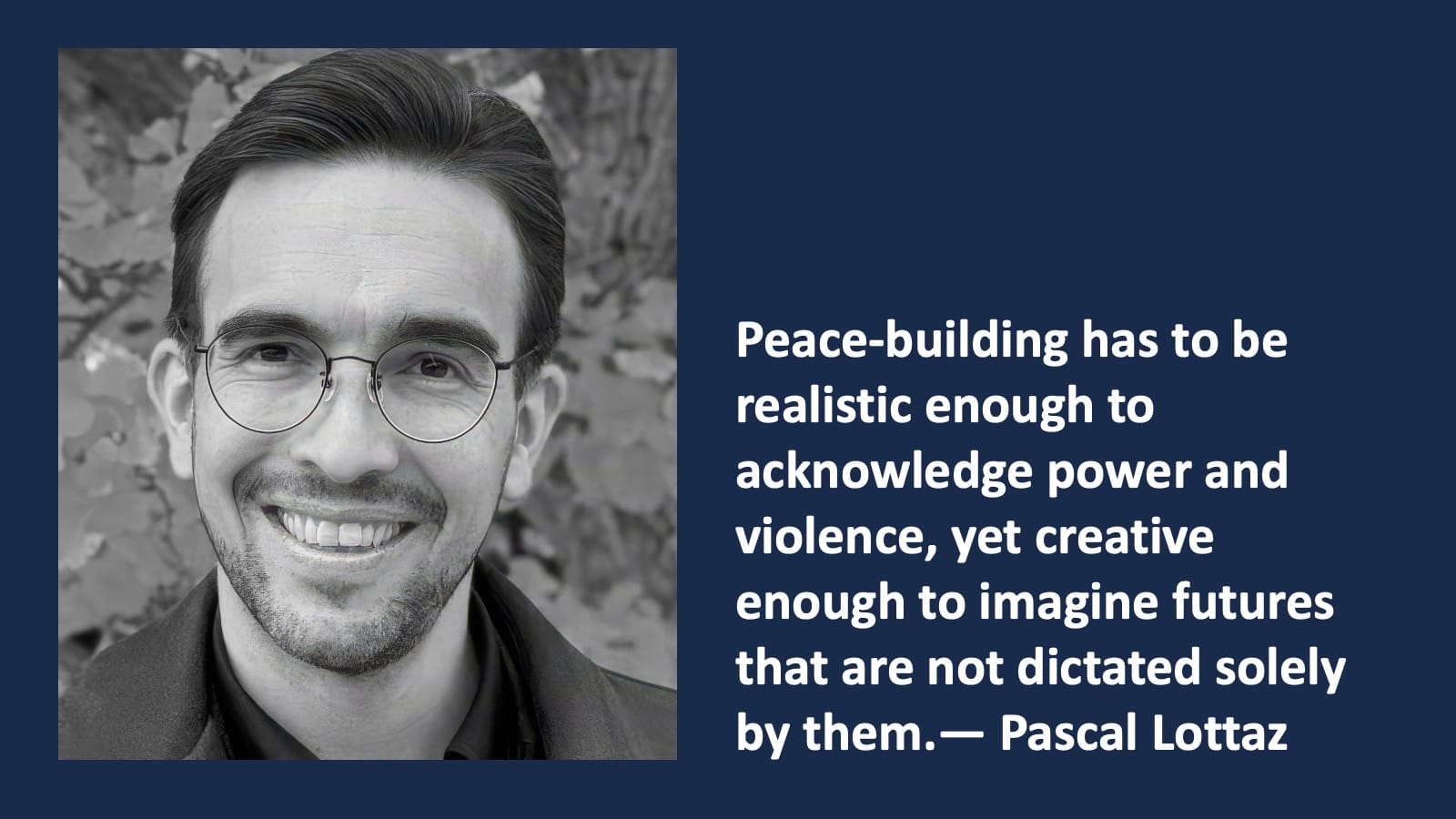
Creative realism occupies the space between these extremes. According to Lottaz, “peace-building has to be realistic enough to acknowledge power and violence, yet creative enough to imagine futures that are not dictated solely by them.” It accepts the harsh realities of violence while refusing to surrender to cynicism. It asks not only what peace should look like in theory, but what is realistically possible at each stage of a conflict. Dialogue, in this framework, is not a one-off event but a process—sometimes slow, sometimes frustrating, often incremental.
This is where peace dialogues held in places like Penang can make a distinctive contribution. Removed from the immediate pressures of conflict zones and great-power rivalries, participants in such settings can think differently. They can test ideas without the glare of media spectacle. They can explore unconventional pathways—humanitarian corridors, cultural exchanges, informal backchannels—that might later inform more formal negotiations.
Importantly, humility must also extend to expectations. “We should be careful not to treat dialogue as a magic solution,” Lottaz said. “Sometimes its greatest success is simply preventing situations from getting worse, or keeping relationships intact until conditions for deeper change emerge.”
Peace dialogues should not be burdened with the demand to “solve” conflicts outright. Their value often lies in softer outcomes: reframing narratives, reducing demonisation, or simply sustaining communication when official channels have frozen. These outcomes are difficult to quantify, but they can be decisive over time.
Penang, Malaysia to serve as bridges for peace dialogues
For Penang and Malaysia, fulfilling this bridging function requires consistency. Neutrality must be maintained even when pressures mount to take sides. Spaces for dialogue must be protected from politicisation. Civil society, academia, and cultural institutions all have roles to play alongside government actors, ensuring that peace-building is not monopolised by any single voice.
The hope invested in peace dialogue today is therefore both modest and profound. Modest, because it does not promise quick fixes in a world saturated with violence. Profound, because it insists that thinking together—across divides, with honesty and restraint—remains possible. In times when shouting often replaces listening, creating a space for quiet, difficult conversation is itself an act of courage.
If Penang and Malaysia can continue to offer such spaces, they may not command the centre stage of global diplomacy. But they can serve something equally vital: bridges that hold, even as the ground beneath them shakes. In violent times, that may be one of the most realistic forms of peace-building we have.
As Dr Pascal Lottaz reflected toward the end of the conversation, “Peace is rarely built through grand gestures. More often, it is sustained by those who are willing to remain patient, humble, and present—especially when violence makes withdrawal seem easier than engagement."
