Rediscovering tradition beyond nostalgia in the age of modernisation
- China’s renewed interest in Confucianism, Daoism and Buddhism is about adapting traditional ideas to contemporary realities
- The Belt and Road Initiative is evolving beyond physical infrastructure into education, digital connectivity, healthcare and cultural exchange
- With its multicultural heritage, educational links and growing digital connectivity, Malaysia is now a meeting point between China and Southeast Asia
By Lin Siu-loong
CHINA’S rise is often measured in economic output, technological breakthroughs and geopolitical influence. But beneath these more visible transformations, another process is taking place — a renewed engagement with the country’s philosophical and civilisational heritage.
For Dr Peter TC Chang, a scholar of comparative philosophy and religion whose research focuses increasingly on the revival of Confucianism in modern China, it represents more than a simple return to the past. China, he argues, is attempting to bring together the ancient and the modern, drawing upon traditional intellectual resources to navigate the challenges of a rapidly changing society.
Rediscovering the intellectual past
“Yes, I believe there is a parallel cultural and, to some extent, civilisational renaissance taking place in China today,” Chang says.
At the surface, this can be seen in the restoration of ancient monuments and artefacts and the revival of traditional arts, crafts, literature and cultural practices. But the deeper transformation lies in the renewed interest in China’s traditional intellectual traditions — particularly Confucianism, Daoism and Buddhism.
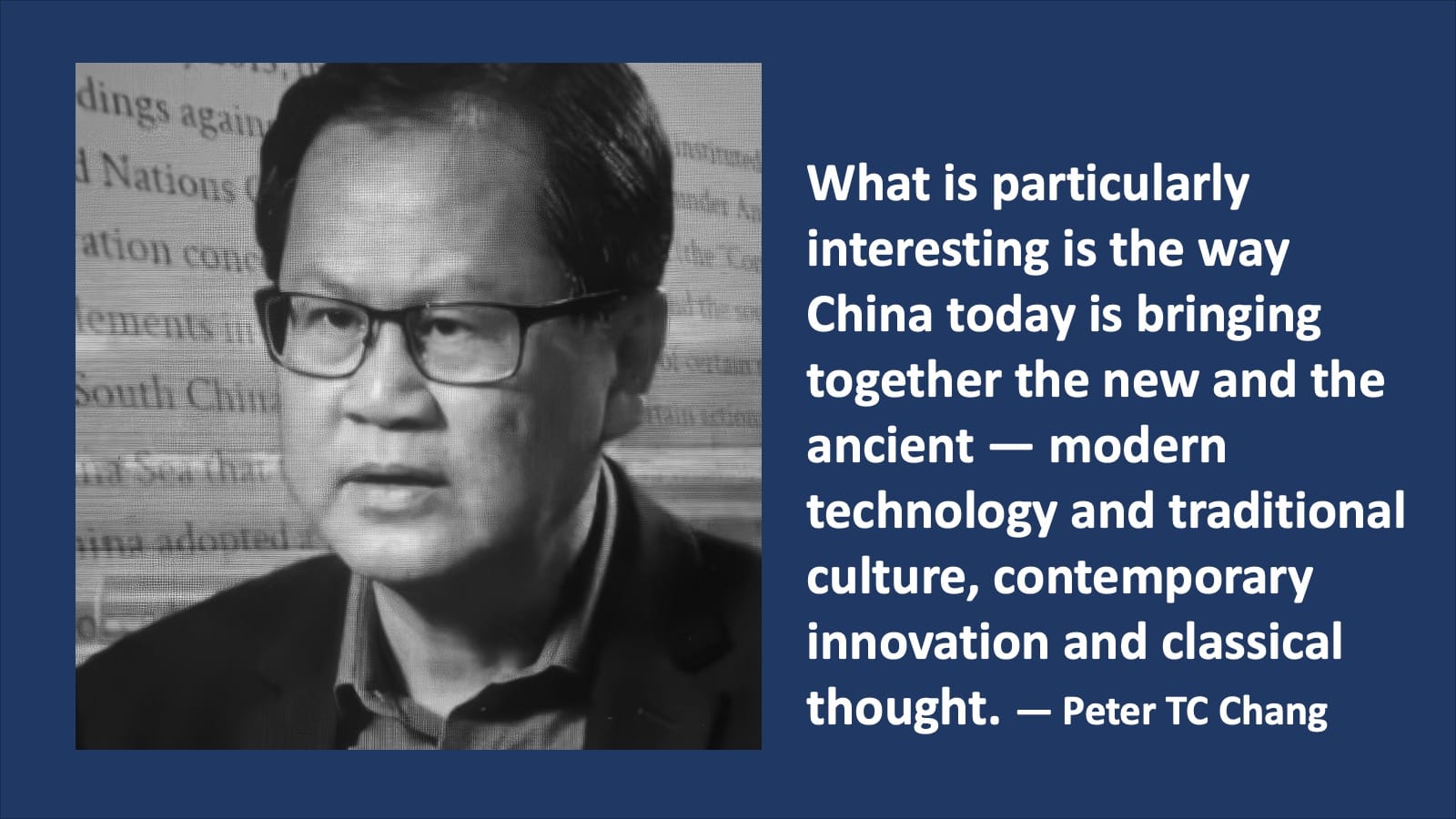
These traditions, Chang notes, are increasingly being revisited not simply as historical relics, but as sources of ideas with contemporary relevance. “What is particularly interesting is the way China today is bringing together the new and the ancient — modern technology and traditional culture, contemporary innovation and classical thought,” says Chang.
Rather than viewing modernisation as requiring a decisive break with the past, China appears increasingly willing to draw upon its heritage as a source of inspiration for the future.
For Chang, this is not simply a revival of tradition. It is an attempt to reinterpret tradition for a society undergoing profound economic, technological and social change.
From rejection to rediscovery
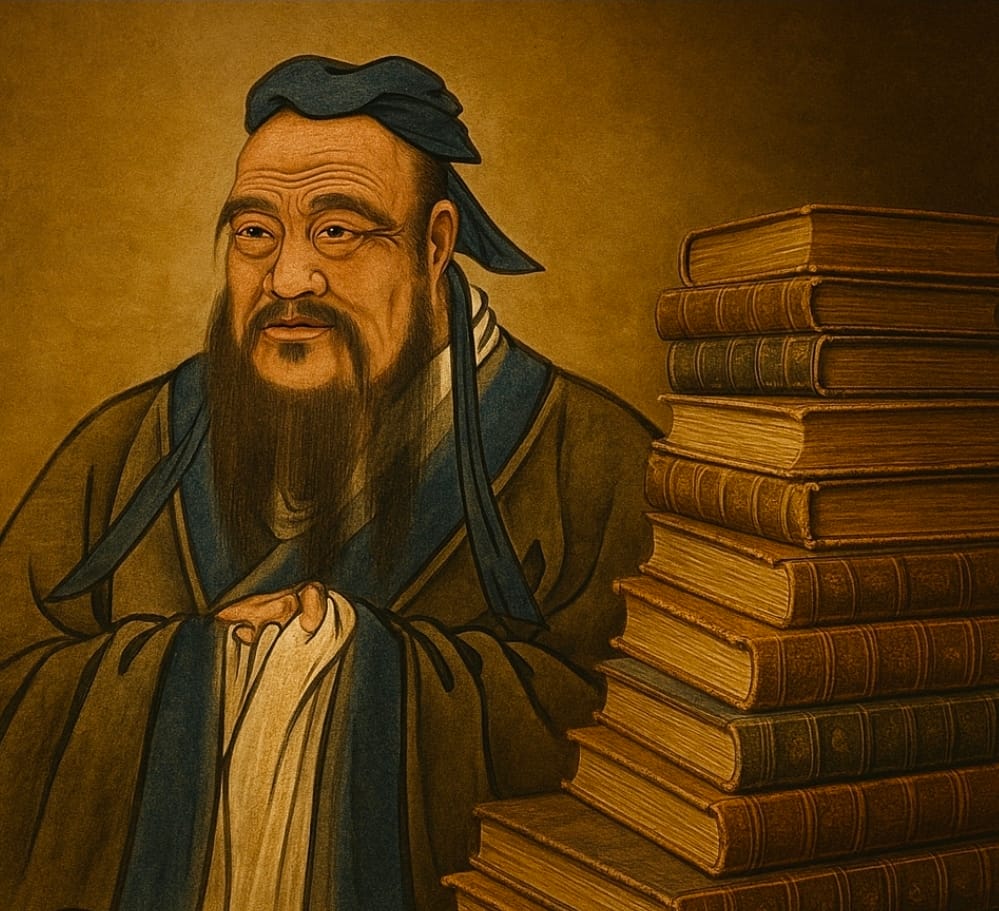
The renewed interest in Confucianism is particularly significant because its modern history has been complicated.
At the beginning of the 20th century, China’s encounter with modernity was deeply traumatic. Confucianism was widely blamed for the country's perceived backwardness, while the ruling elite looked increasingly towards Western ideologies, eventually including Marxism.
After decades of distancing itself from traditional thought, China is now reassessing what its indigenous intellectual traditions might contribute to modernisation.
Chang believes one attraction lies in the contrast between Western individualism and China's stronger communitarian tradition.
“The West’s narrow focus on civil and political liberties is seen as a flaw that China has sought to remedy by elevating social and economic rights to equal standing,” he says.
In this interpretation, China’s development model seeks to establish a more collective and holistic balance between individual and social needs.
Idea has historical echoes
During the late Qing dynasty, reformist official Zhang Zhidong famously promoted the concept of “Chinese essence and Western utility”—the idea that China could adopt useful Western forms while preserving its own cultural foundations.
More than a century later, Chang sees echoes of this approach in China’s pursuit of modernisation with Chinese characteristics.
From Tian Xia to a shared future
This revival also has implications beyond China’s borders. Chang points to the ancient concept of Tian Xia, or “All under Heaven”, as one intellectual resource behind contemporary ideas of the global community.
President Xi Jinping’s vision of a “community of shared future for humankind,” for instance, is deeply rooted in the concept of Tian Xia.
“In this classical worldview, all people are understood to belong to one human family, bound together under the dictates and benevolent will of Heaven,” says Chang.
This philosophical heritage, he argues, offers a different way of imagining international relations — one less dependent on rigid civilisational or ideological binaries.
Confucian ideas may also have practical relevance to some of the world's major challenges.
On inequality, Chang points to the communitarian ethos that he believes contributed to China’s extraordinary reduction in poverty.
On ageing societies, the Confucian principle of filial piety provides a cultural foundation for thinking about family responsibility and care for older generations.
On climate change, Confucian holism and Daoist naturalism offer a philosophical framework that places humanity within, rather than outside, the natural order.
On artificial intelligence, as AI transforms society, Chang believes the Confucian emphasis on human dignity can provide an ethical guardrail.
“Technological development” must ultimately remain aligned with “human flourishing”, he argues.
BRI beyond bricks and mortar
Chang’s research also examines the Belt and Road Initiative through the lens of soft power. He believes it is important to look beyond the BRI’s original emphasis on infrastructure and trade.
The initiative has evolved into a broader ecosystem encompassing the Digital BRI, Health Silk Road, Sustainable BRI and Education BRI.
“This evolution signals a broader shift — from mere infrastructure connectivity to genuine people-to-people connectivity,” he says.
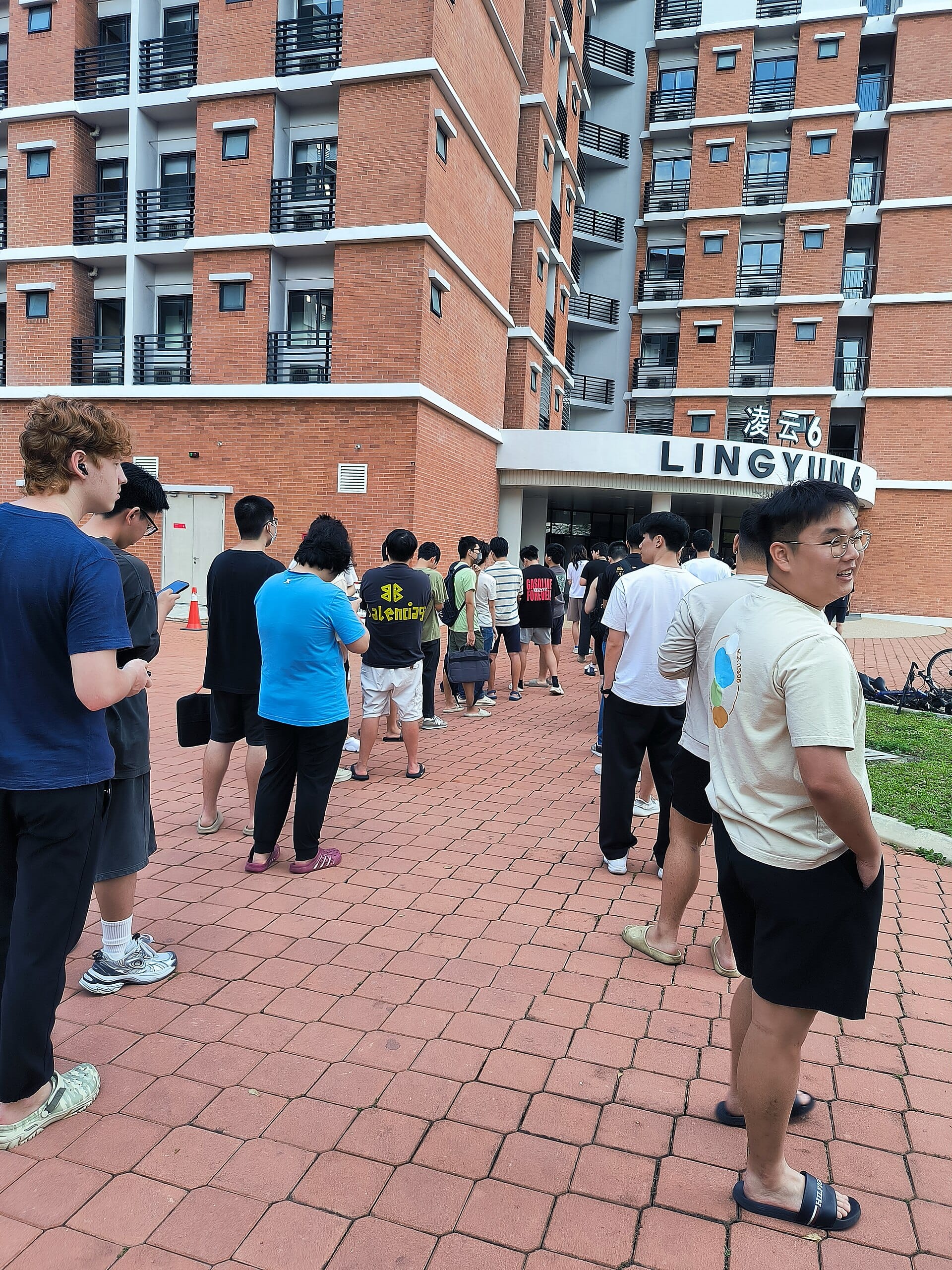
Education is particularly important. In educational exchange, the establishment of the Xiamen University Malaysia campus is a prime example of how the Education BRI is transforming Malaysia into a hub for intellectual engagement and mutual learning. This institution not only brings Chinese educational models to Southeast Asia but also fosters cross-cultural dialogue between Malaysian, Chinese, and international students.
The digital dimension could prove even more influential. Platforms such as TikTok and Xiaohongshu already allow young people across Asia to encounter one another’s cultures, lifestyles, and perspectives directly. These platforms, Chang suggests, represent a new form of grassroots cultural diplomacy.
Malaysia as a civilisational crossroads
For Malaysia, this evolution matters in particular. “At the crossroads of East and West, Malaysia has long served as a natural meeting point for great civilisations,” Chang says. The BRI, he argues, has reinforced this historic role.
Physical connectivity is expanding through rail, ports and airports, while educational links have been strengthened by institutions such as Xiamen University Malaysia.
Malaysia’s growing digital role is equally significant. With major Chinese technology companies establishing regional operations in Kuala Lumpur, the country is becoming an increasingly important node in Southeast Asia's digital networks. Taken together, these developments mean Malaysia is not just a beneficiary of the BRI.
“It is an active node in an expanding network of people-to-people exchanges,” Chang says.
Hybrid nature of the BRI
Chang does not see the debate over whether the BRI is economic or geopolitical as an either-or proposition. “The BRI is primarily an economic project, but one with significant geopolitical consequences,” he explains. Its central objectives remain socio-economic development — infrastructure, education, healthcare and digitalisation.
But economic integration inevitably produces geopolitical consequences, particularly as China’s global economic presence grows amid intensifying competition with the United States. For countries participating in the BRI, this creates a difficult balancing act.
Most, Chang observes, have resisted choosing sides. Their preference is strategic autonomy: engaging China while maintaining relationships with the US, Europe and other powers. “The challenge for both China and participating countries lies in managing this duality constructively,” he says.
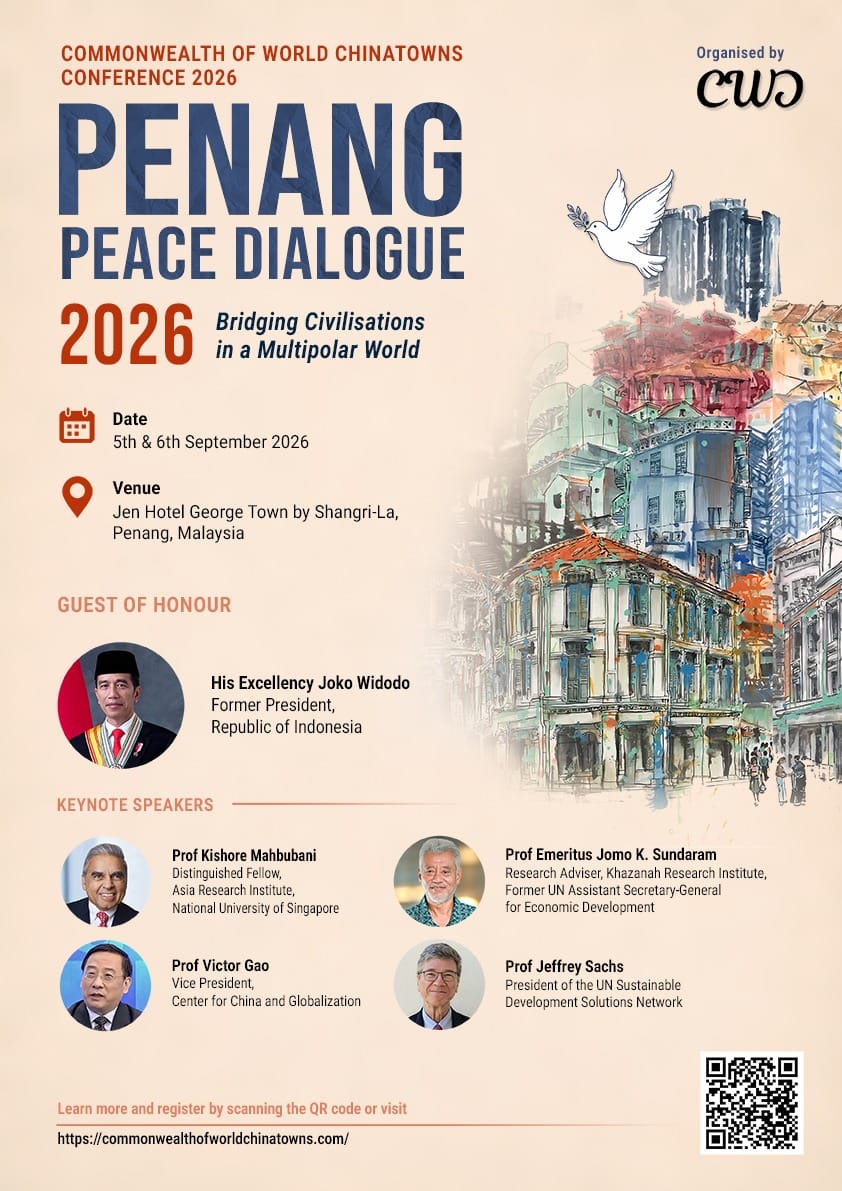
For more information on the Penang Peace Dialogue, click here to visit the official website. Click here to check out the Postscript NAC story, Penang Peace Dialogue: Bridging civilisations in a multipolar world.
Soft power from the marketplace
Perhaps the most interesting development, however, is that China’s global influence is increasingly being carried not by governments but by companies and popular culture. Chang describes this as the rise of “China Inc.” Companies such as Alibaba, Huawei, TikTok, DeepSeek and BYD are changing perceptions of China — from a source of low-cost manufacturing to a producer of advanced technology and globally competitive products.
Popular culture may become another major frontier. Chinese films, music, and entertainment are reaching wider audiences across Asia, while brands such as Mixue and Haidilao are becoming familiar parts of everyday life. For Chang, this organic presence may prove more powerful than official cultural diplomacy.
“Unlike official initiatives, which can be perceived as propaganda, Chinese enterprises are increasingly embedded in the daily lives of ordinary people.” That may ultimately be China’s most effective form of soft power: not telling the world how to see China, but allowing people to experience China for themselves. And in that process, China’s civilisational renaissance may be doing something more profound than simply reviving an ancient heritage.
It may be attempting to translate that heritage into a language for the modern world.
Read Part 2 of the interview with Peter Chang: Bridging civilisations in a multipolar world. Click here.
Dr Peter TC Chang is a visiting professor at the China University of Foreign Affairs, Beijing; research associate at the Malaysia-China Friendship Association (Malaysia), and former deputy director, Institute of China Studies, Universiti Malaya.