As geopolitical rivalries deepen and military tensions spread worldwide, Professor Emeritus Jomo Kwame Sundaram believes the world urgently needs to rediscover and revive one of the Global South’s most enduring initiatives—non-alignment.
- Reviving NAM 2.0: Jomo calls for a “Non-Aligned Movement 2.0” focused on peace, sustainable development and strategic autonomy, rather than becoming another geopolitical bloc.
- ASEAN and the challenge of strategic neutrality: As Southeast Asia faces growing pressure from competing major powers, ASEAN’s traditions of dialogue, consensus and strategic autonomy remain more relevant than ever.
- Why Penang matters for peace and dialogue: With its UNESCO World Heritage status, multicultural heritage and long history of exchange, Penang offers a powerful setting for rebuilding trust, cooperation and peaceful coexistence.
By Sebastian Lim
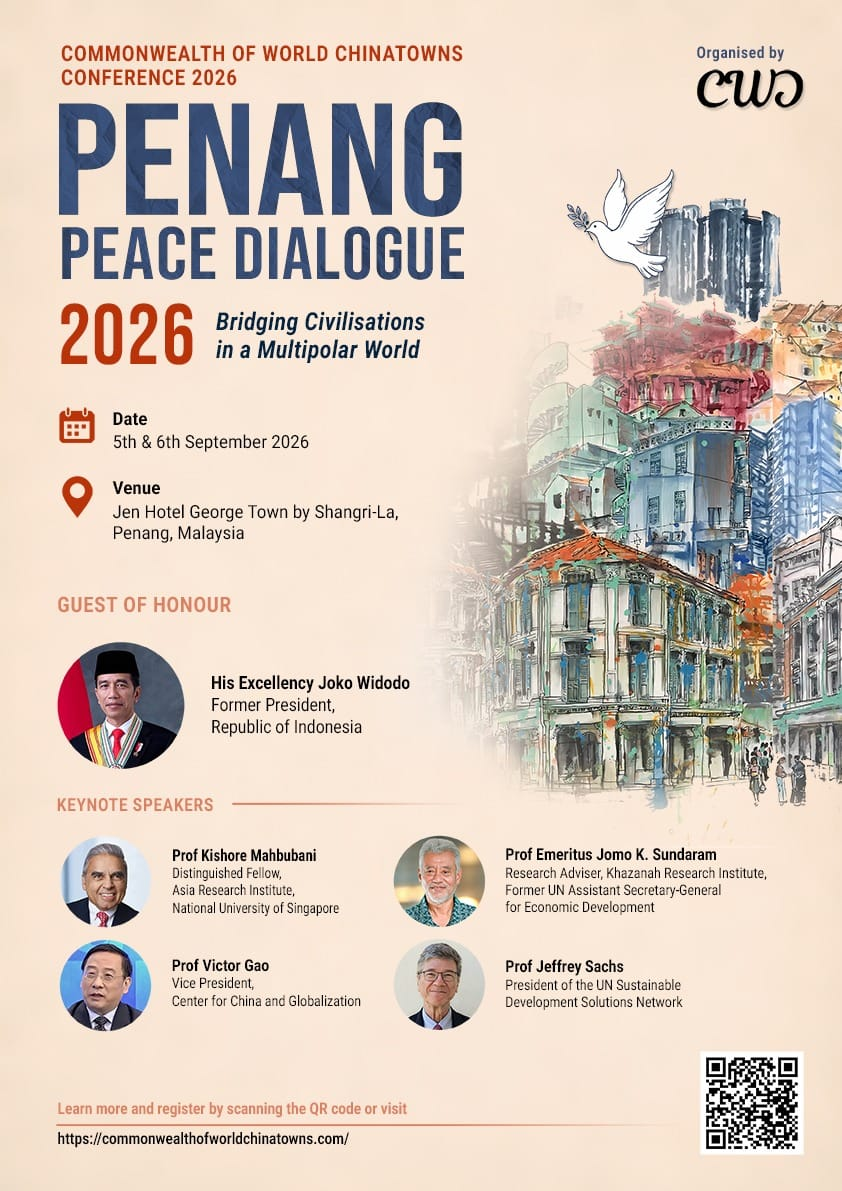
THE internationally respected economist, former United Nations assistant secretary-general and one of Asia’s foremost public intellectuals will bring this message to the inaugural Penang Peace Dialogue (PPD). He sees an opportunity there to revive conversations on peace, cooperation and dialogue at a time when many nations are once again being pressured to choose sides.
Jomo shared these views during a recent podcast interview with Dr Pascal Lottaz, an associate professor at Kyoto University, Japan.
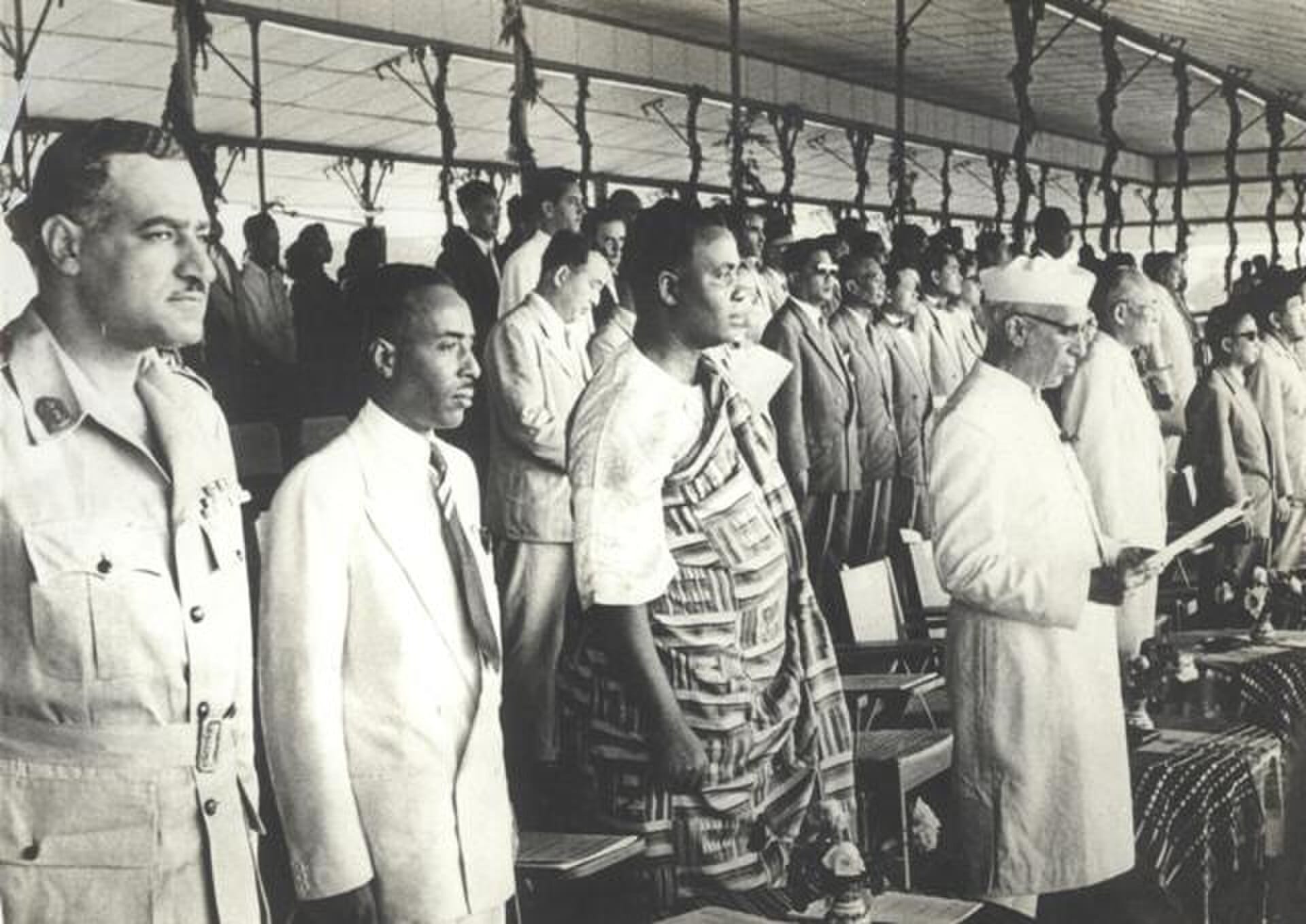
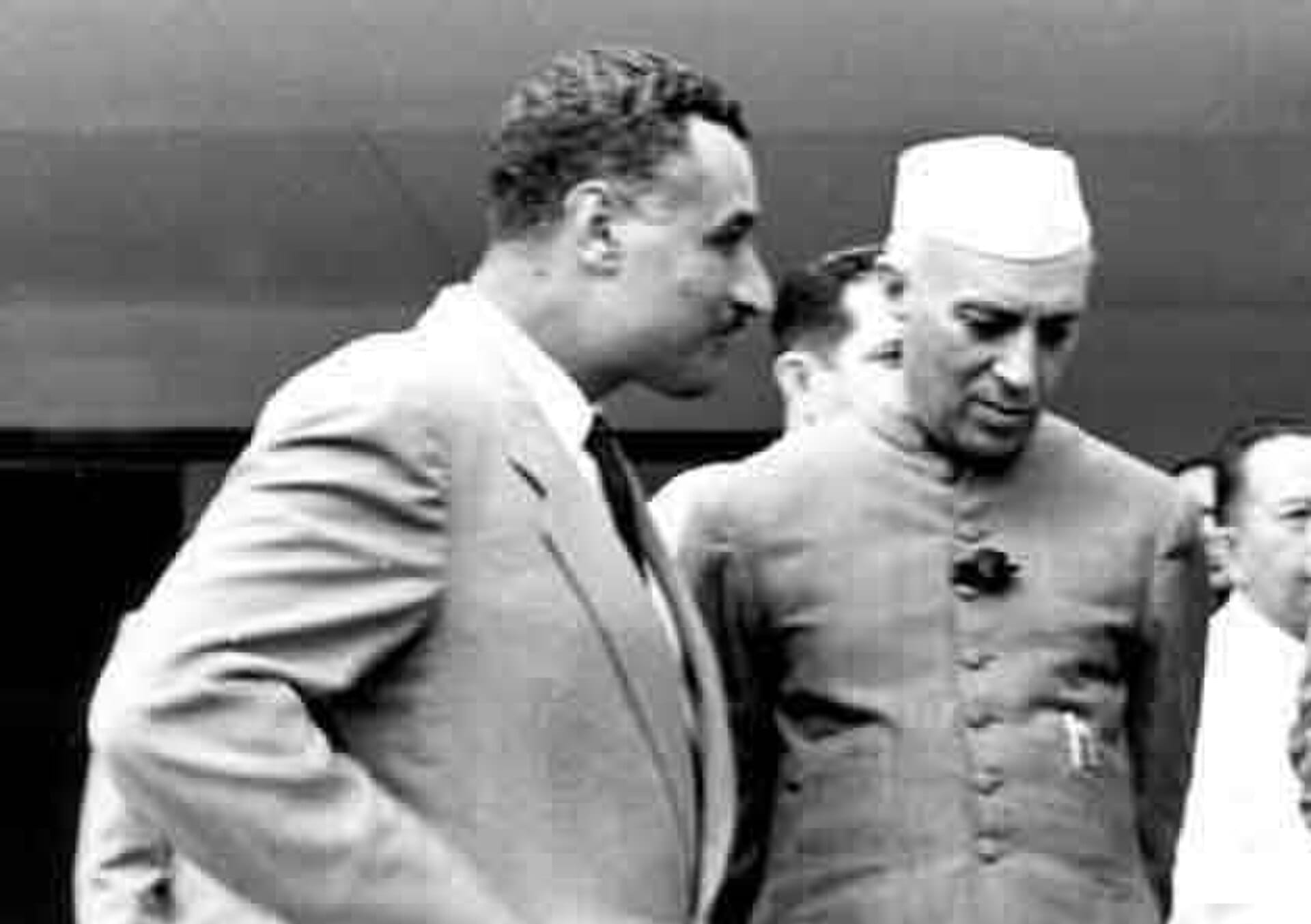
For Jomo, today’s world is very different from the bipolar Cold War era, yet many dangers are strikingly familiar. Instead of letting developing nations become pawns in renewed great-power competition, he argues that a revitalised “Non-Aligned Movement 2.0” should focus on peace-building, sustainable development, and preserving strategic autonomy.
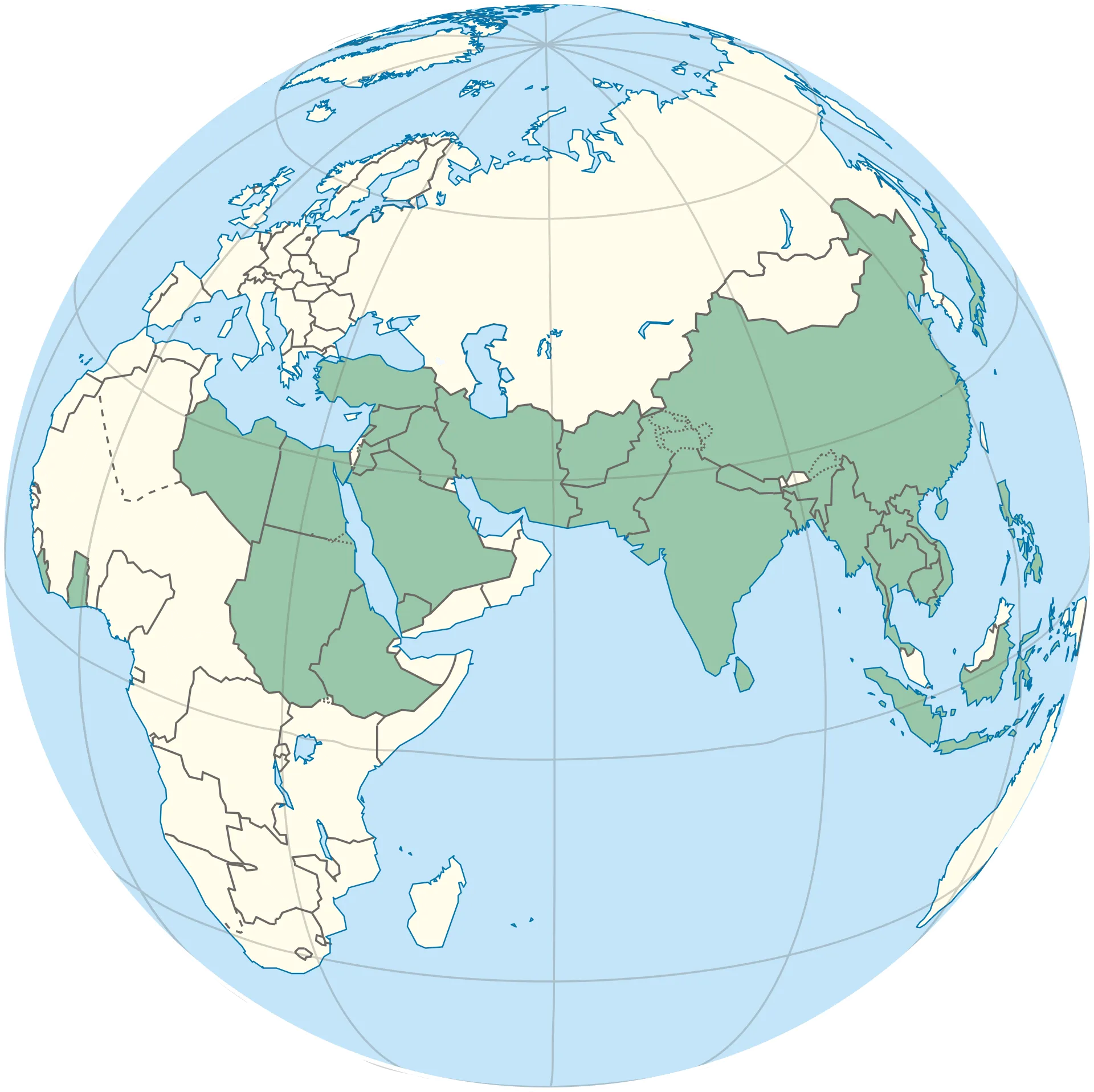
“The Non-Aligned Movement continues to exist, but after the end of the first Cold War, it gradually faded into irrelevance as it lacked the institutional capacity to reinvent itself as its leadership was marginalised,” Jomo says.
Rather than becoming another political bloc, Jomo believes a renewed NAM should evolve into a platform that prevents conflict and advances the interests of developing nations. Its priorities, he adds, should be rooted in a strong commitment to peace and sustainable development rather than traditional conceptions of security encouraging military competition.
Jomo notes that many Global South countries have little to gain from becoming entangled in conflicts between major powers. Instead, they should strengthen their own resilience while cooperating on shared challenges such as sustainable development and promoting socio-economic security.
Jomo also believes that the revival of non-alignment should begin with achievable objectives and a few core norms rather than ideological tests.
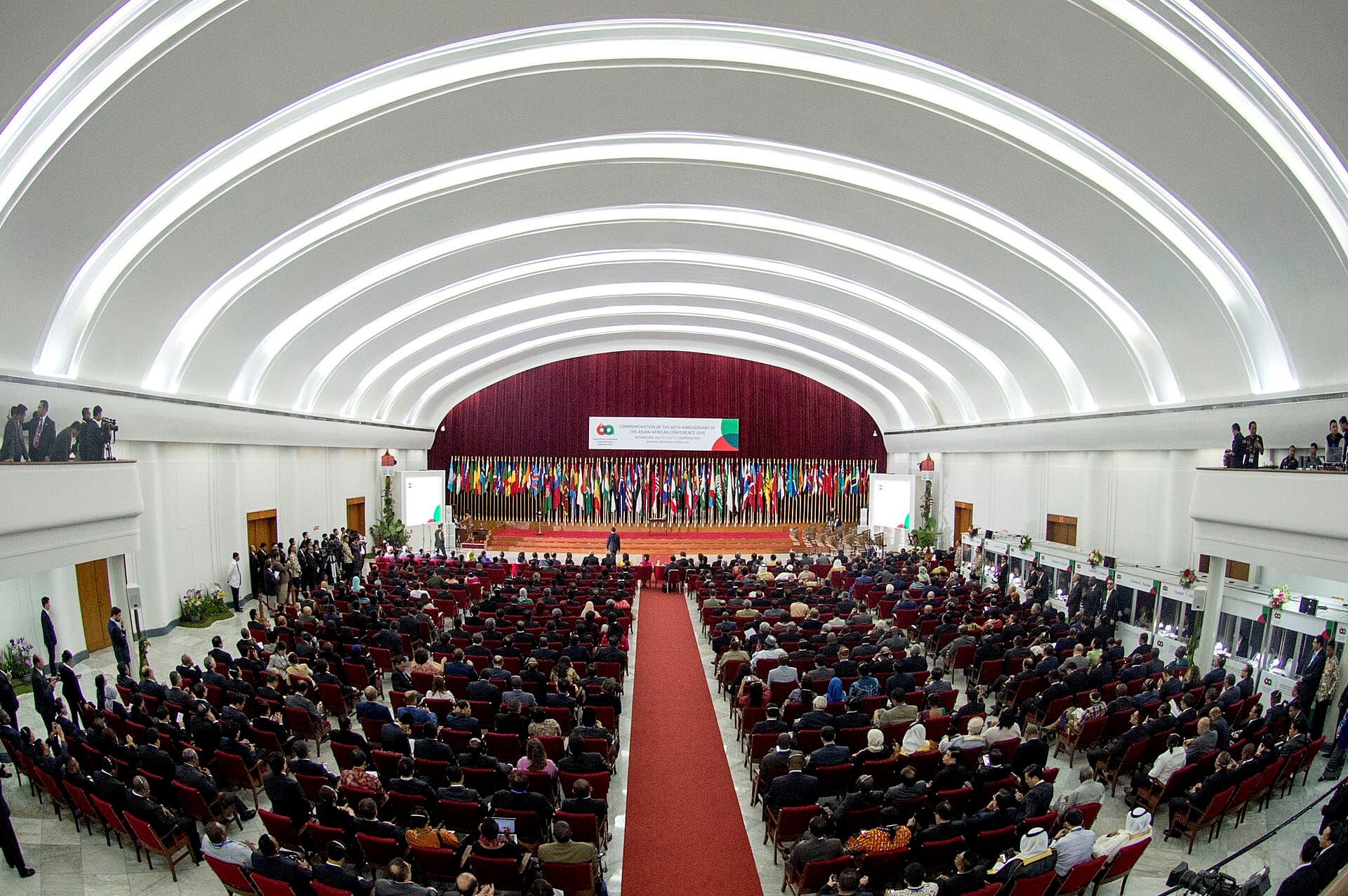
“We need a minimal consensus to get things moving,” he says, suggesting that the movement should work with existing arrangements such as the G77 while gradually developing new intellectual and policy capacities and capabilities.
ASEAN’s neutrality under pressure
While ASEAN has historically championed neutrality, Jomo acknowledges that Southeast Asia today faces increasing strategic pressures.
He recalls that ASEAN adopted the Zone of Peace, Freedom and Neutrality (ZOPFAN) in 1973 as a bold declaration that the region should remain free from interference by major powers well before the Vietnam and other Indochina wars ended.
However, recent developments have made that aspiration increasingly difficult to sustain. Several ASEAN countries have expanded military cooperation with external powers, raising concerns that Southeast Asia could inadvertently become caught in wider geopolitical conflicts.
Jomo also believes that the revival of non-alignment should begin with achievable objectives and a few core norms rather than ideological tests..
Jomo warns that such developments risk undermining ASEAN’s long-standing role as a stabilising force in the region. Nevertheless, he believes ASEAN’s traditions of dialogue, consultation and consensus remain valuable, even if the region itself is currently divided on many strategic issues.
Although he is cautious about expecting ASEAN collectively to lead a revival of the Non-Aligned Movement, he sees considerable value in reinforcing the principles that originally guided the regional grouping — peaceful coexistence, strategic autonomy and diplomatic engagement.
For Jomo, these principles are becoming increasingly relevant as global tensions rise and the North ignores Global South aspirations.
Why Penang matters
Jomo believes Penang provides an ideal setting for the Penang Peace Dialogue. As a UNESCO World Heritage city with centuries of multicultural exchange, Penang represents far more than a conference venue. It is itself an example of peaceful coexistence.
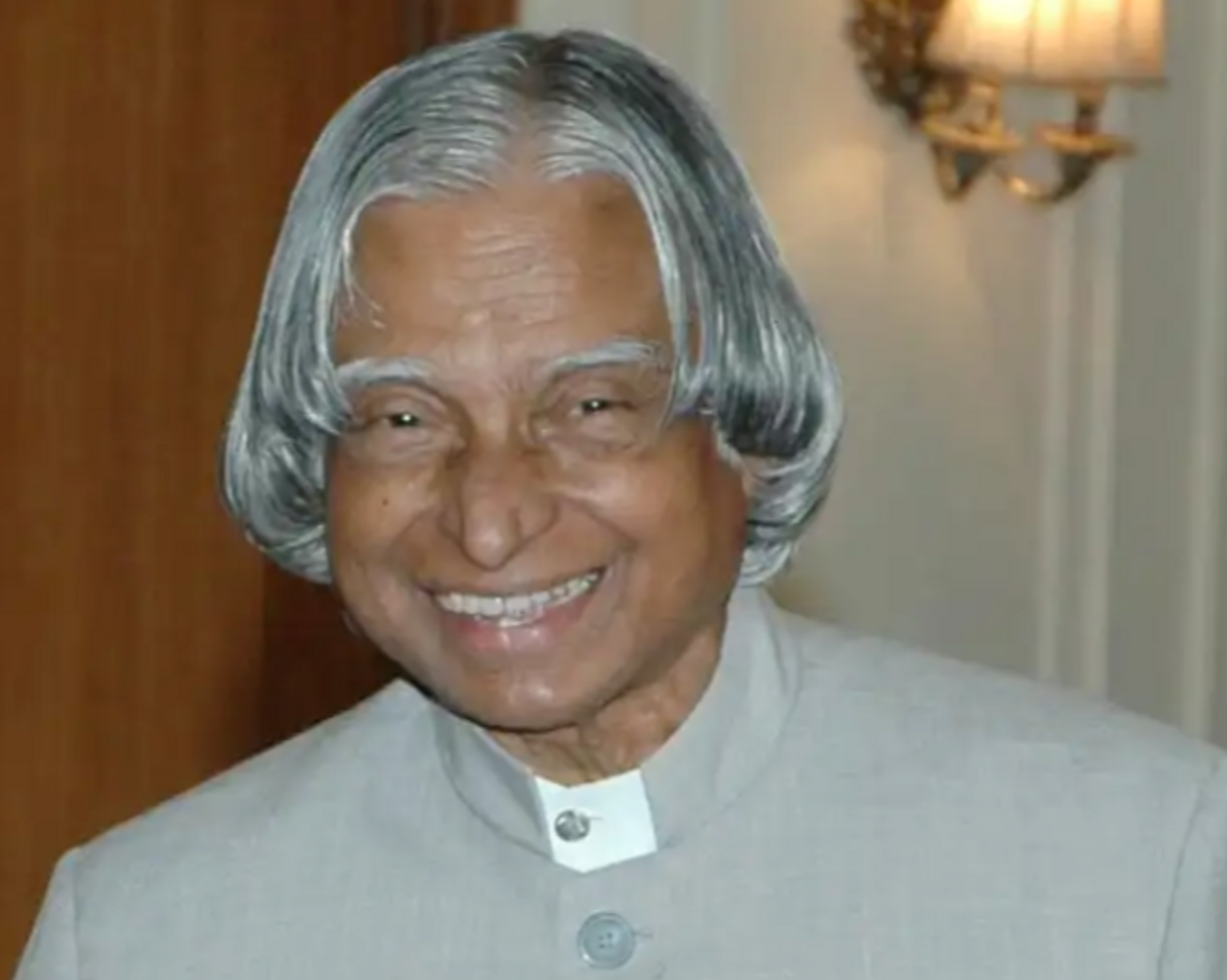
Throughout its history, Penang has demonstrated that economic progress, cultural diversity and social harmony can flourish together. Different communities, faiths and traditions have coexisted while contributing to a vibrant commercial and intellectual culture. The late Indian President and nuclear scientist Dr APJ Abdul Kalam celebrated this rich heritage. That legacy gives the island particular credibility when discussing peace-building in today’s increasingly fragmented world.
For Jomo, Penang is no stranger to him as he was born and schooled in the island famously nicknamed the Pearl of the Orient. He first started working in Malaysia at Universiti Sains Malaysia in Penang in 1974 with students who went on to stellar careers.
Hence, the Penang Peace Dialogue represents more than another international conference. It provides an opportunity to reconnect with traditions of dialogue that have long characterised both Penang and Southeast Asia.
Peace before power politics
Throughout his recent discussions on global affairs, Jomo has consistently argued that peace must become the central organising basis for international cooperation. He worries that the world is becoming increasingly militarised while investment in sustainable development receives declining attention.
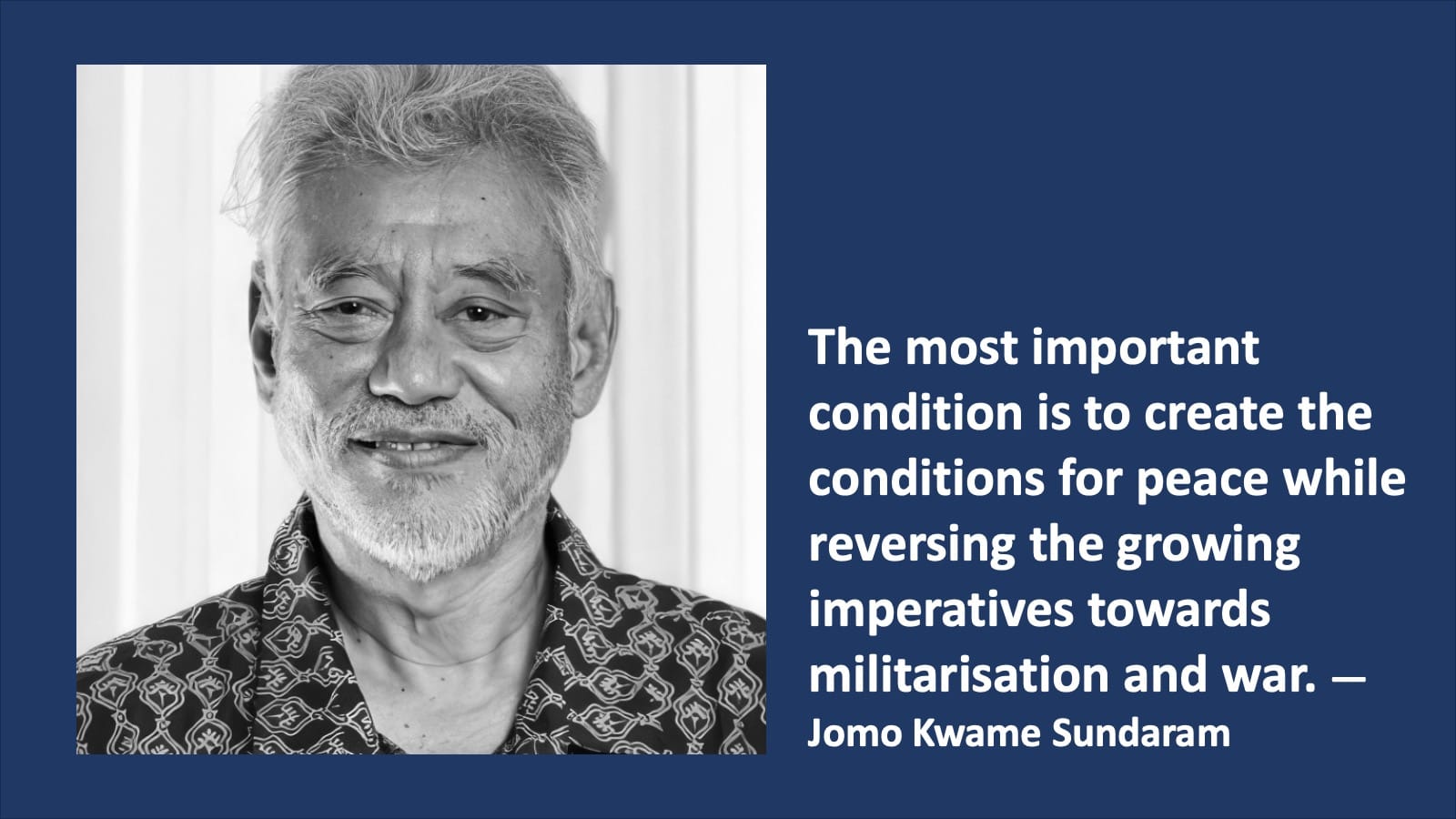
“The most important condition,” he says, “is to create the conditions for peace while reversing the growing imperatives towards militarisation and war.”
As global competition intensifies, Jomo believes initiatives such as the Penang Peace Dialogue can help rebuild confidence in dialogue over confrontation.
He believes the Global South should resist pressure to become participants in new geopolitical confrontations and instead focus on improving the lives of its own citizens. Rather than viewing neutrality as passive avoidance, Jomo sees it as an active commitment to diplomacy, dialogue and independent decision-making. This philosophy aligns closely with the objectives of the Penang Peace Dialogue, which seeks to create a neutral platform where diverse voices can exchange ideas across political, cultural and ideological boundaries.
As global competition intensifies, Jomo believes initiatives such as the Penang Peace Dialogue can help rebuild confidence in dialogue over confrontation. His vision of a Non-Aligned Movement 2.0 is not about recreating the past but adapting its enduring norms and principles to a changing world.
In that sense, Penang’s own story becomes part of the message. A city built on openness, diversity and exchange offers a powerful reminder that peace is not merely the absence of conflict, but the presence of understanding, mutual respect and shared prosperity.
For Jomo, there could hardly be a more appropriate place to begin that conversation.
Join Professor Emeritus Jomo Kwame Sundaram at Penang Peace Dialogue 2026 at Jen Penang Georgetown by Shangri-La on Sept 5 and 6, 2026.
For more information on the Penang Peace Dialogue, click here to visit the official website. Click here to check out the Postscript NAC story, Penang Peace Dialogue: Bridging civilisations in a multipolar world