


- Diversity over definition: Southeast Asian art resists a single narrative, shaped instead by layered histories, cultures, and colonial encounters.
- Beyond Western frameworks: Scholars and curators are rethinking inherited art histories while building more locally grounded perspectives.
- Institutions as catalysts: Museums and art spaces are evolving into platforms that nurture dialogue, collaboration, and regional voices.
By Anansa Jacob
AS SOUTHEAST ASIAN art gains greater global visibility, the question is no longer simply how to define it, but how to understand it on its own terms. For scholars and curators working across the region, this involves navigating a complex terrain shaped by colonial histories, diverse cultural identities, and evolving institutional frameworks.
In Part 1 of the separate conversations, Dr Hu Chao — a Research Associate Professor at Guangzhou Academy of Fine Arts, China — and veteran curator Kwok Kian Chow, of Singapore, offered complementary perspectives on how Southeast Asian art is being reframed in an increasingly decentralised world. Together, their insights point to a shared conclusion: the region’s artistic future lies not in a singular narrative but in plurality, dialogue, and self-determined frameworks.
A region too complex for a single narrative
For both Dr Hu and Kwok, Southeast Asian art resists any attempt at neat categorisation. Its defining characteristic is not unity, but diversity.
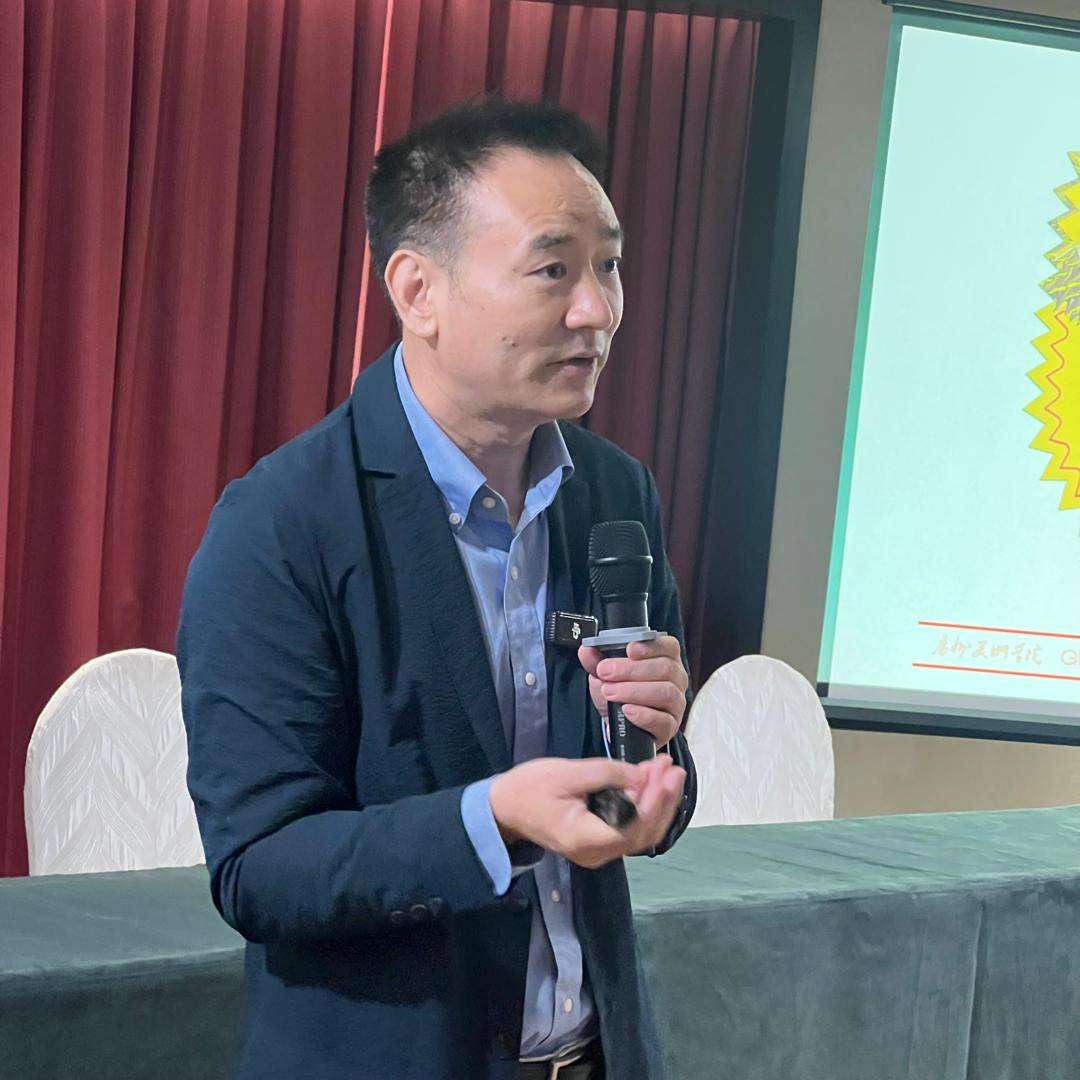
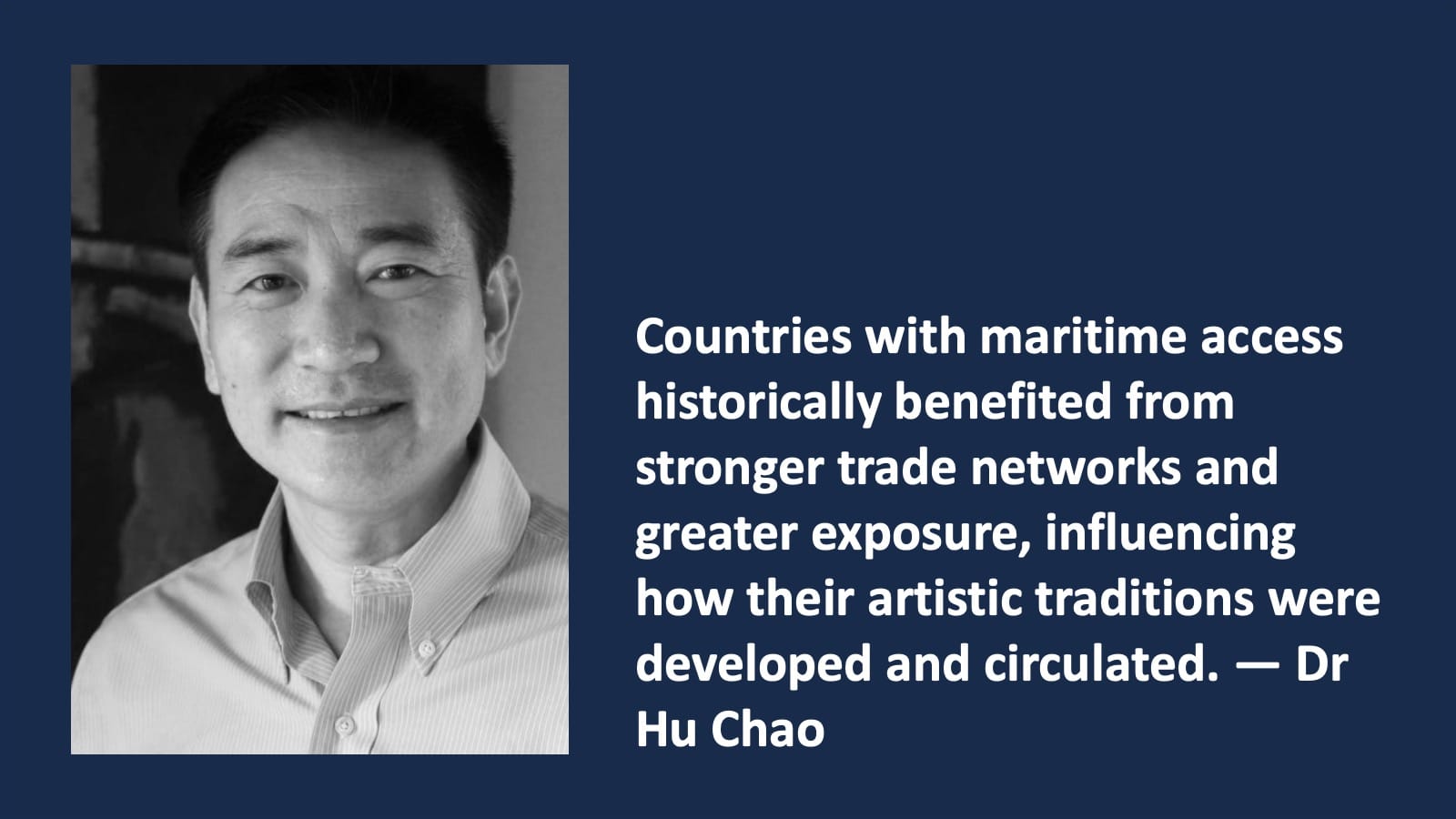
Dr Hu points to the structural and historical challenges that have shaped the region’s visibility. Access to research materials remains uneven, and geography has played a decisive role in determining cultural reach. Countries with maritime access, for instance, historically benefited from stronger trade networks and greater exposure, influencing how their artistic traditions developed and circulated.
Yet the deeper complexity lies in the region itself. Spanning countries from Myanmar to Timor-Leste, Southeast Asia encompasses vast differences in language, religion, and historical experience. Influences have been absorbed in multiple ways — sometimes through exchange, other times through imposition — making any unified framework inherently unstable.
Kwok echoes this view, emphasising that Southeast Asian art must always be understood with qualification. Its richness lies in its multiplicity: overlapping cultures, indigenous traditions, and layered histories of modernity shaped by colonial encounters.
One of the few shared reference points, he suggests, is the region’s transition into modern art under colonial influence. With the exception of Thailand, most Southeast Asian nations underwent colonial rule, resulting in parallel yet distinct engagements with Western artistic forms.
Rather than viewing this diversity as a problem, both see it as an asset. The challenge is not to simplify it, but to develop ways of understanding that can hold these differences in productive artistic expressions.
Moving beyond Western frameworks
A central issue raised by Dr Hu is the extent to which Southeast Asian art history has been shaped by inherited Western paradigms.
As an academic discipline, art history developed relatively late in the region. Much of what is now understood as “tradition” is, in fact, filtered through concepts introduced during or after colonial rule. This has led to the widespread assumption of continuity, when in reality, there was often a rupture between pre-colonial cultural practices and modern art systems.
These borrowed frameworks, while useful, can also obscure local realities. They impose categories and hierarchies that may not align with indigenous ways of seeing and making art.
Still, Dr Hu does not advocate for a complete rejection of these systems. Instead, he acknowledges their continued relevance while calling for a more conscious engagement with them — one that allows for the gradual construction of alternative narratives.
He outlines four possible pathways to structure Southeast Asian art history:
The national dimension: Art histories shaped by state institutions, focused on building national identity and cultural sovereignty through official narratives.
The disciplinary dimension: Approaches rooted in rigorous academic traditions, such as formal analysis and iconography, which establish stable methodological standards for the field.
The spatio-temporal dimension: Frameworks that transcend national borders by using key historical shifts or geopolitical alignments. A prime example is Area Studies, which examines the region through shared experiences of the Cold War or post-colonial transitions, offering a lens that is both local and trans-regional.
The pluralistic dimension: Most significantly, an open-ended model that embraces plurality and interdisciplinary perspectives. This open-minded approach moves away from fixed definitions, allowing for decentralised, non-linear narratives that reflect a region in a constant state of "becoming.”
Kwok’s curatorial perspective aligns closely with this. He sees any attempt to define Southeast Asian identity as provisional — a starting point for dialogue rather than a fixed conclusion.
For him, the role of the curator is to mediate between different ways of seeing: balancing how Southeast Asia understands itself with how it is perceived externally. This dynamic — what he describes as a negotiation between “interiority and exteriority” — is central to moving beyond rigid, imported frameworks.
Institutions as platforms for a shared future
If definitions remain fluid, institutions play a crucial role in shaping how Southeast Asian art is experienced and understood.
Kwok, drawing from his experience building major museums, views institutions not as static repositories but as living platforms. They operate within a wider “discursive field,” where meaning is continuously produced through interaction between curators, artists, scholars, and audiences.
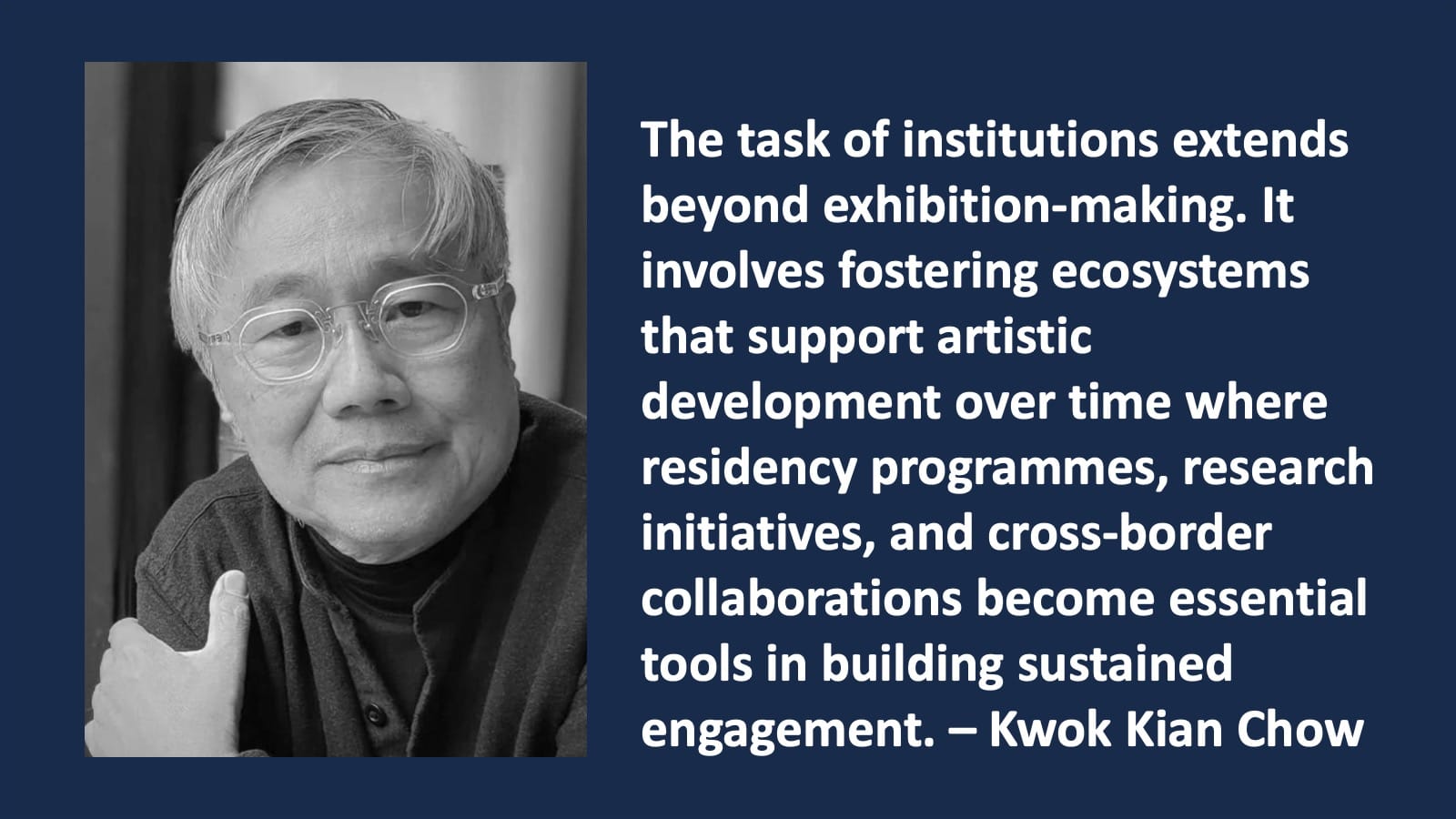
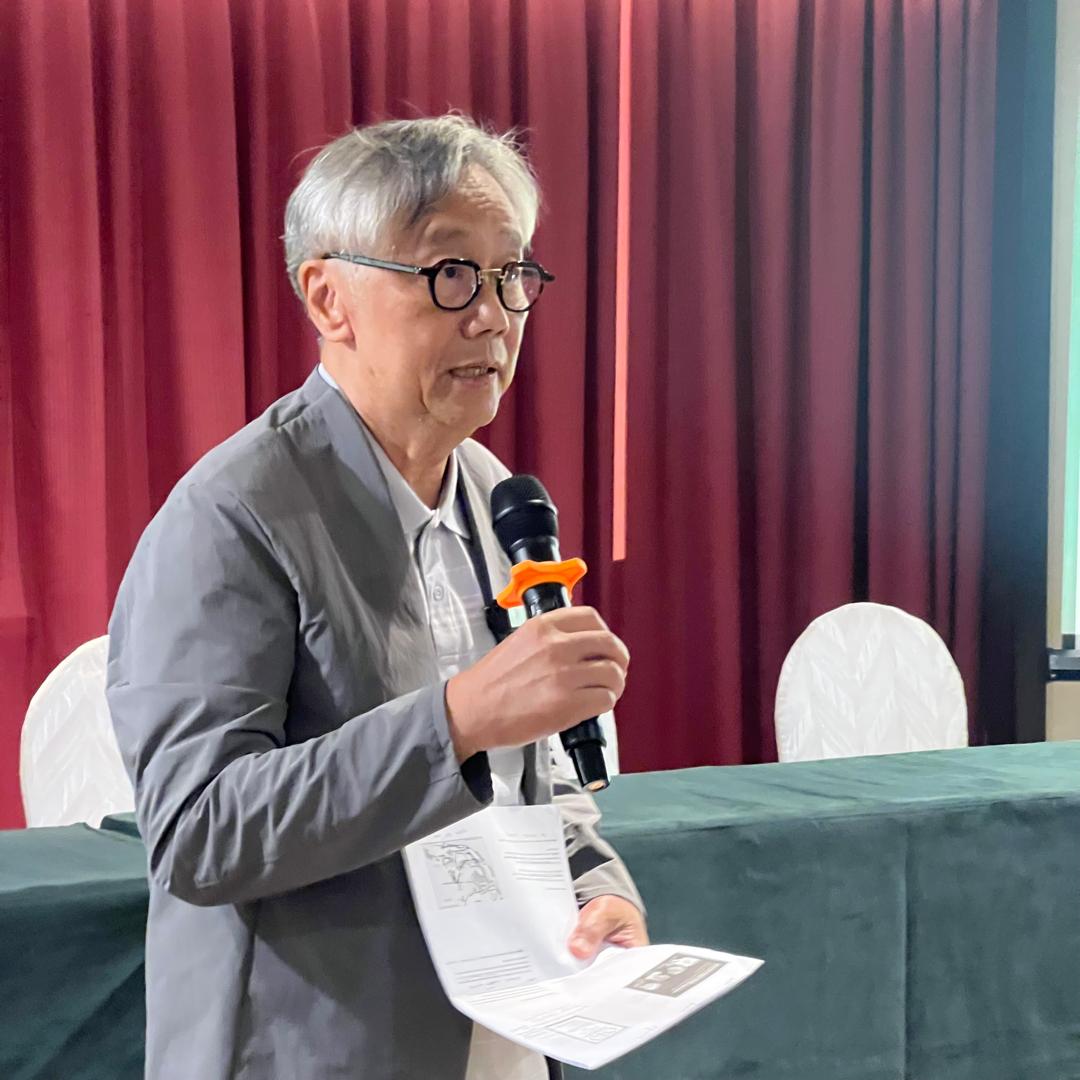
In this context, the task of institutions extends beyond exhibition-making. It involves fostering ecosystems that support artistic development over time. Residency programmes, research initiatives, and cross-border collaborations become essential tools in building sustained engagement.
This is particularly important in a region marked by uneven resources. While some countries benefit from well-funded institutions and active art markets, others rely more heavily on grassroots and artist-run initiatives. Yet this diversity of structures can also be a strength, contributing to a more decentralised and dynamic cultural landscape.
Dr Hu’s more open-ended model of regionalisation finds resonance here. Rather than imposing a unified narrative, institutions can function as meeting points — spaces where multiple perspectives coexist and interact.
What emerges is not a singular identity, but a constellation of voices. Increasing connections between artists, curators, and institutions across Southeast Asia are strengthening, creating new opportunities for exchange and collaboration. For Kwok, this signals a shift towards a more self-determined future. As regional networks deepen, Southeast Asian art is becoming less dependent on external validation and more confident in articulating its own terms of reference.
A continuing conversation
In both perspectives, there is a shared resistance to closure. Southeast Asian art is not something to be definitively framed, but something continually in the process of becoming.
Its future lies in its openness — in the willingness to question inherited systems, to embrace complexity, and to create platforms where diverse histories and identities can be explored without being reduced.
In a decentralised world, this may well be its greatest strength.
Check out Part 2 - Breaking the Frame: Reimagining Southeast Asian Art across borders and platforms here.



