

Robert Jones’ vision for a new National Heritage Museum in Wellington
- New Zealand's search for historical identity and the questions that inspired a new museum project
- The historical mysteries and unexplained artefacts that challenge conventional narratives
- Creating a public forum where alternative perspectives and historical inquiry can be openly explored
By Lin Siu-loong
WHAT if New Zealand’s history is more complex than the conventional narrative suggests? What if unexplained artefacts, oral traditions and overlooked historical evidence point to a richer and more contested story of the nation’s past?
These questions lie at the heart of an ambitious project being developed by Wellington-based researcher Robert Jones. Through the proposed New Zealand Museum of Anomalous Antiquities, Jones hopes to create a space where historical anomalies, maritime exploration, archaeology and alternative interpretations of New Zealand’s early history can be examined alongside established scholarship.
The project has already attracted interest from researchers, collectors and cultural organisations in New Zealand and overseas. While some of the theories explored by the museum remain controversial, Jones believes they deserve careful investigation rather than dismissal.
In this first part of the conversation with New Asia Currents for NAC Focus on Hidden History of New Zealand, Jones discusses his personal journey, the discoveries that inspired the museum, and his vision for creating an institution dedicated to keeping historical questions open.
What first inspired you to establish this proposed museum in New Zealand?
New Zealand occupies a unique position on the world stage. Despite being a relatively young nation, it continues to grapple with a contested and often uncertain sense of national identity. I do not believe this can simply be explained by the country’s age. After all, modern nation-states such as Italy and Germany are younger than New Zealand itself.
Growing up, I often found myself asking what it truly meant to be a Kiwi. Like many New Zealanders, I turned to history in search of answers, hoping to better understand both my own identity and the broader story of the nation. Over time, that curiosity developed into a deep interest in history, archaeology, metal detecting and scuba diving.
As my research expanded, I became increasingly aware of a range of documented historical anomalies – artefacts, oral traditions, linguistic peculiarities, unexplained locations and unusual historical accounts – that do not fit neatly within the prevailing narrative that Māori discovered New Zealand in the thirteenth century with Europeans following several centuries later.
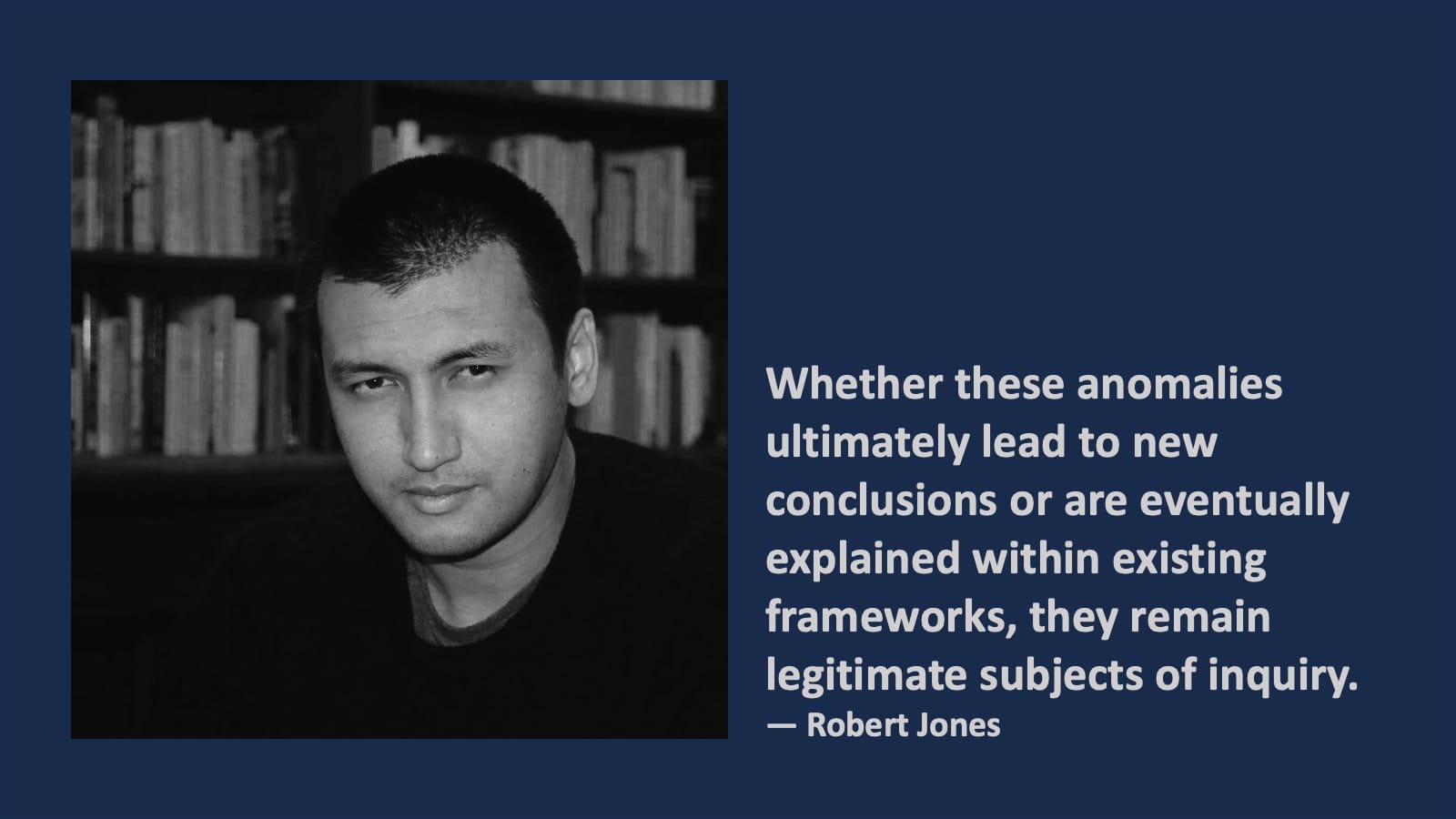
Whether these anomalies ultimately lead to new conclusions or are eventually explained within existing frameworks, they remain legitimate subjects of inquiry worthy of serious investigation.
Unfortunately, many of these subjects remain under-researched, controversial or largely absent from public discussion. In many respects, the apparent motive behind this actively resembled that of active conspiracy by established groups in mainstream archaeology, media or private association (trusts, families, iwis, etc.). This is in spite of some of the earliest figureheads of New Zealand archaeology believing in a people who must have discovered and lived in New Zealand before the Māori’s arrival, with many Māori themselves maintaining this to be true in their own oral tradition. In many cases, however, competing political, cultural or institutional interests have made open examination of these questions difficult, to say the least.
This convinced me that there was a need for a new institution, independent of the sterile monopoly of history currently held, dedicated to preserving, exhibiting and encouraging research into these lesser-known aspects of New Zealand’s past.
As is an oft-repeated maxim, those who control the past control the future, with those who control the present controlling the past. Accordingly, the proposed museum intends to fill the role in taking back the past within our collective present.
It will be a non-partisan institution that does not advocate any theory in isolation, but simply provides a forum where evidence can be presented, debated and explored. My hope is that important historical questions remain open to investigation for future generations rather than being overlooked or forgotten. This is my aim and what I hope to achieve with the museum.
Can you tell us about your own background and how your interest in maritime history developed?
My interest in history and archaeology was complemented by hobbies such as metal detecting and scuba diving. As a teenager, I even dreamed of becoming a full-time treasure hunter – an ambition undoubtedly inspired by watching too many Indiana Jones films.
That passion eventually led me to become involved in efforts to locate the wreck of the General Grant, an American sailing ship lost in the Auckland Islands in 1866. The vessel is rumoured to have carried a substantial cargo of gold worth around NZD10 million and has long been regarded as the ‘holy grail’ of unsolved shipwreck mysteries in the South Pacific.
Through this work, I came into possession of archival material from noted marine archaeologist and treasure hunter Kelly Tarlton, who conducted two expeditions in search of the wreck. Although that project remains on hold for now, it opened the door to a much broader fascination with maritime history.
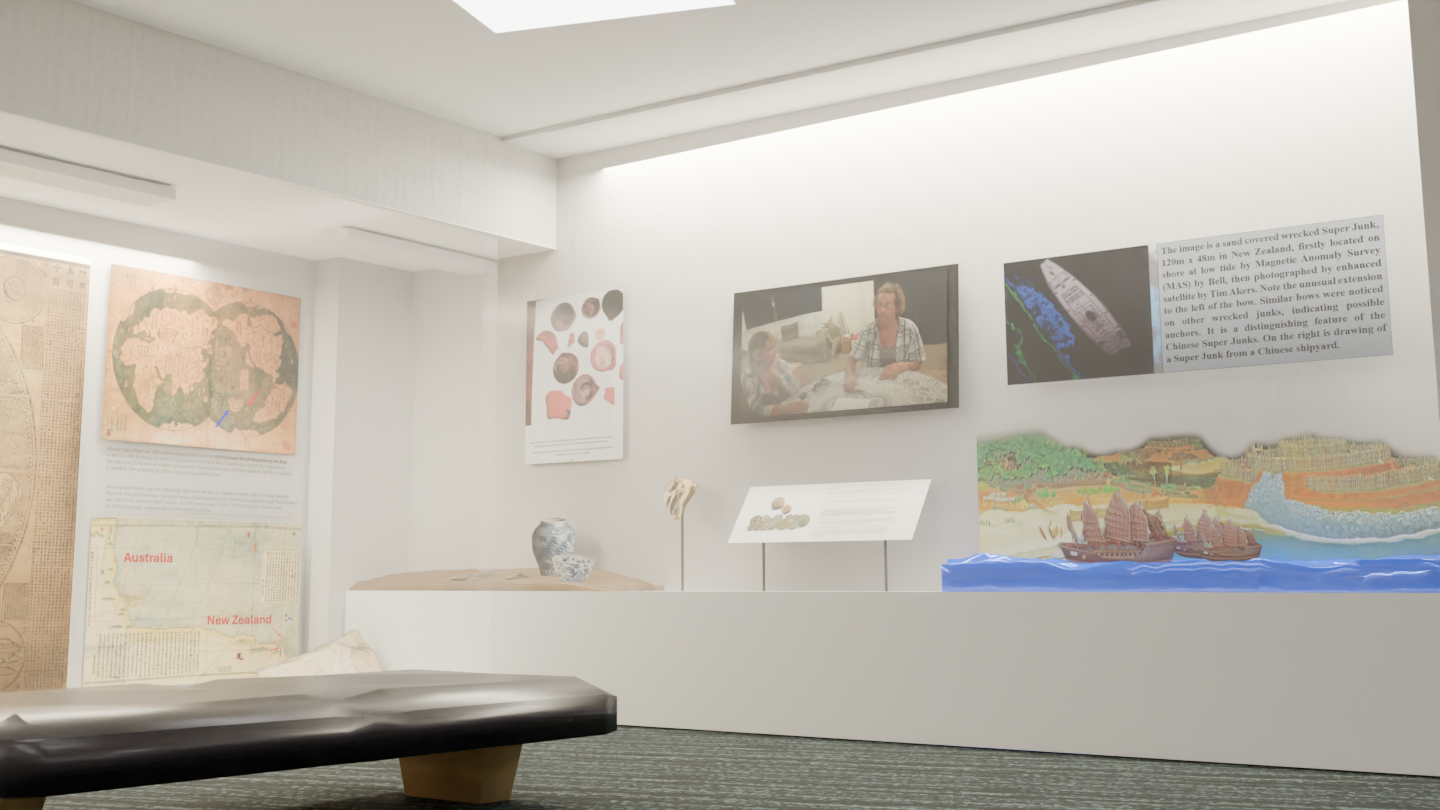
My interests gradually expanded beyond treasure hunting and shipwrecks to include the movement of peoples, trade networks and voyages of exploration across the Pacific. In particular, I became fascinated by accounts of early Chinese voyages and the possibility of Chinese exploration reaching far beyond what is conventionally accepted.
Admittedly, part of that fascination stemmed from this original treasure-hunting angle. After all, stories of vast Chinese treasure fleets and richly laden junks sailing the oceans are hard for a keen adventurer to ignore. However, the more I studied the evidence, the more interested I became in the voyages themselves, in particular, the accounts of early Chinese voyages and what they might reveal about the history of their exploration.
Today, I am far more interested in uncovering the treasures of history than any actual gold and silver, although a bit of both wouldn’t hurt.
Was there a particular discovery that convinced you these subjects deserved greater public attention?
The Tamil Bell was the first major anomaly that truly captured my attention. Even mainstream academics acknowledge that it is a genuine archaeological mystery. Numerous theories have been proposed regarding its origins, ranging from Sri Lankan traders to the possibility of a lost Chinese vessel reaching New Zealand.
When I contacted the national museum, Te Papa, I was granted an opportunity to examine the bell in person. Seeing the artefact up close was remarkable. During my visit, I asked why such a fascinating object was not on public exhibition. I was told that when the bell was first donated, it had been presented briefly before being removed from display. This was due to certain Iwi groups complaining it was effectively ‘racist’ as it appeared to undermine the narrative Māori were here first.
It was upon hearing this that I became convinced there was a need for an independent institution where such artefacts could be examined and openly discussed. There are countless anomalous artefacts in New Zealand, like the Tamil Bell, that deserve public attention, awareness, and scholarly attention. The proposed museum can help fill this void.
What is the core vision of the proposed museum?
I hope visitors will leave with a broader appreciation of New Zealand’s history and an understanding that many aspects of our past remain open to investigation. Even if visitors ultimately reject every speculative theory presented, a deeper sense of the peoples and cultures that may have contributed to our history may hopefully be gained, as well as an openness to future discoveries.
History is not a static subject. New evidence emerges, new questions are asked, and old assumptions are often challenged. The museum seeks to encourage that spirit of inquiry.
Why do you believe New Zealand is the right place for such a museum
We did initially consider locating it in Mongolia… In all seriousness, however, New Zealand’s ongoing search for identity makes it particularly suited to this kind of institution. Beyond that, certain Māori traditions, particularly those associated with Waitaha narratives, describe New Zealand as playing an important role in wider Pacific networks of travel and exchange. Whether one accepts every aspect of these traditions or not, they point towards a view of New Zealand that is far more interconnected with the wider Pacific world than many people appreciate, acting as a kind of civilisational centrepoint for the sea-faring peoples of the South Pacific.
In that sense, the museum takes on a revolutionary, in the traditional etymological sense of the word meaning ‘revolving back’, role – as a place where New Zealanders can rediscover an appreciation of this lost past reconsidered within the broader history of the South Pacific.
How important is it for the museum to present alternative historical narratives alongside conventional history?
It is absolutely central to the museum’s mission. That is the sole point which separates us from any other existing historical institution in the country today.
Most people already possess a broad understanding of conventional New Zealand history. What interests them are the unanswered questions – the mysteries and uncertainties that remain unresolved. It is those areas that the museum hopes to explore.
Do you hope the museum will become a centre for research and education?
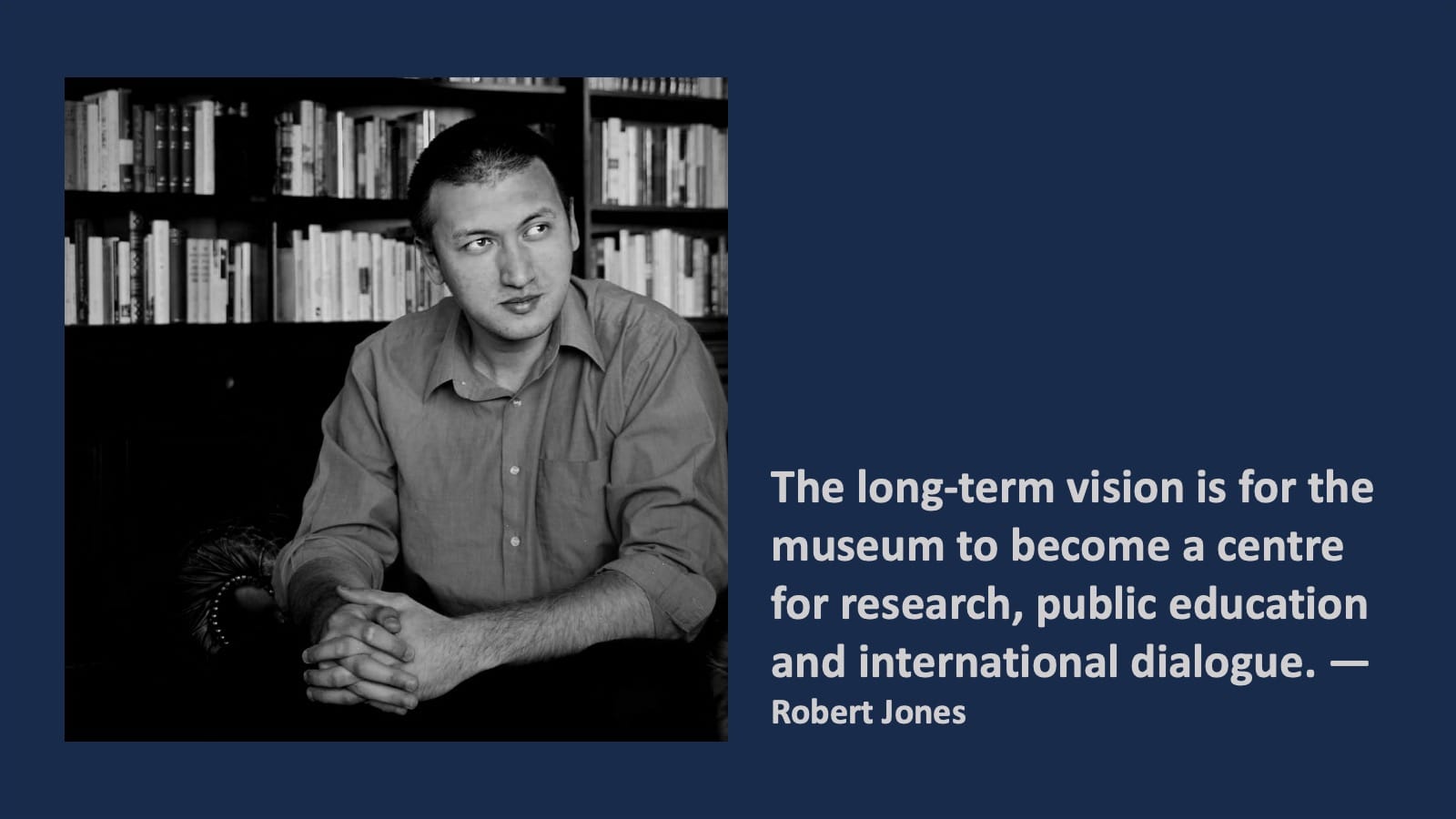
Very much so. The long-term vision is for the museum to become a centre for research, public education and international dialogue, which I hope to see realised within my lifetime. Ideally, it would serve as a place where researchers, historians, collectors and members of the public can exchange ideas and collaborate on investigations.
Of course, there is a certain irony here. If future research conclusively proves some of today’s anomalies and alternative theories, they will then cease to be anomalies at all. At that point, we will be forced to redesign parts of the museum. That would be a problem I would be very happy to have.
Museum to preserve curiosity
For Robert Jones, the proposed New Zealand Museum of Anomalous Antiquities is about more than preserving artefacts. It is about preserving curiosity. By creating a space where historical mysteries can be examined rather than ignored, Jones hopes to encourage a wider conversation about New Zealand's past and the many questions that remain unanswered. Whether one agrees with every theory or not, he believes the process of inquiry itself is essential.
In Part Two, Jones discusses the challenges of building the museum, navigating controversy, fostering international partnerships and creating an institution capable of shaping future conversations about New Zealand’s place in Pacific history. Watch out for it.



