As US-China rivalry intensifies and outside military powers expand their presence in the region, ASEAN’s commitment to neutrality faces one of its most serious tests. Professor Emeritus Jomo Kwame Sundaram argues that Southeast Asia must rediscover the peace principles that defined the organisation from its earliest days.
- Revisiting ASEAN’s forgotten neutrality
- Countries are caught between great powers
- Peace can be sustained by economic justice
By Sebastian Lim
ASEAN has long been regarded as one of the world’s most durable regional organisations, having helped maintain a degree of stability in Southeast Asia since its founding in 1967.
Yet for Professor Emeritus Jomo Kwame Sundaram, ASEAN’s record must be viewed against the ambitions that shaped it in the first place. Its most significant commitment came in 1973, when ASEAN declared its aspiration for a Zone of Peace, Freedom and Neutrality (ZOPFAN) — a bold statement made even before the Vietnam War had ended.
The organisation, however, has evolved considerably since those early years. Its founding members were anti-communist, but later members included governments with different political orientations. With Timor-Leste now part of ASEAN, the organisation has become even more diverse.
That diversity is both a strength and a weakness.
Jomo points to the difficulty of reaching collective positions when influential member states can effectively block or shape ASEAN decisions. National priorities do not always coincide, and what is desirable for one government may not necessarily be acceptable to another. The result is an ASEAN that often struggles to reach consensus precisely when the region most needs a common voice.
The great-power test
The challenge has become sharper as rivalry between the United States and China increasingly defines the strategic environment of the Indo-Pacific. ASEAN countries have strong economic reasons to maintain relations with China. Jomo notes that China remains the major trading partner of all ASEAN countries. At the same time, some ASEAN governments have supported an increased US military presence in the region — a development that represents a departure from the bloc’s original vision of neutrality.
The challenge is whether ASEAN can retain enough strategic independence to prevent Southeast Asia from becoming another arena for great-power competition. The pressure does not come from Washington and Beijing alone. European countries, Japan and Australia have also developed military presences in the South China Sea region, generally in alignment with wider US strategic interests.
For ASEAN, this makes pursuing an independent regional position increasingly complicated. “The question, therefore, is not simply whether ASEAN supports one major power or another,” he says. “It is whether ASEAN can retain enough strategic independence to prevent Southeast Asia from becoming another arena for great-power competition.”
Jomo’s assessment is sobering. ASEAN rarely invokes neutrality in practice, and consensus has proved easier on issues outside the immediate region. ASEAN governments, for example, generally opposed Russia’s invasion of Ukraine, demonstrating that some common ground remains possible. But internal divisions and external pressures make strong collective positions on regional security much harder to achieve.
This creates a paradox. ASEAN may be most important when it can speak collectively, yet the very diversity that makes the organisation representative can also make collective action difficult.
Peace cannot exist in isolation
For Jomo, the discussion about peace also raises a broader question: what does peace actually mean? It cannot simply mean the absence of armed conflict. Economic conditions matter too. He argues that the relationship between economic justice and peace is complex.
International relations and domestic inequality are often treated as separate subjects, even though they are conceptually connected. International economic frameworks can influence how wealth and resources are distributed within individual countries, although the relationship is neither simple nor direct. That distinction matters for Southeast Asia, where economic development and regional integration have transformed societies even as inequalities remain.
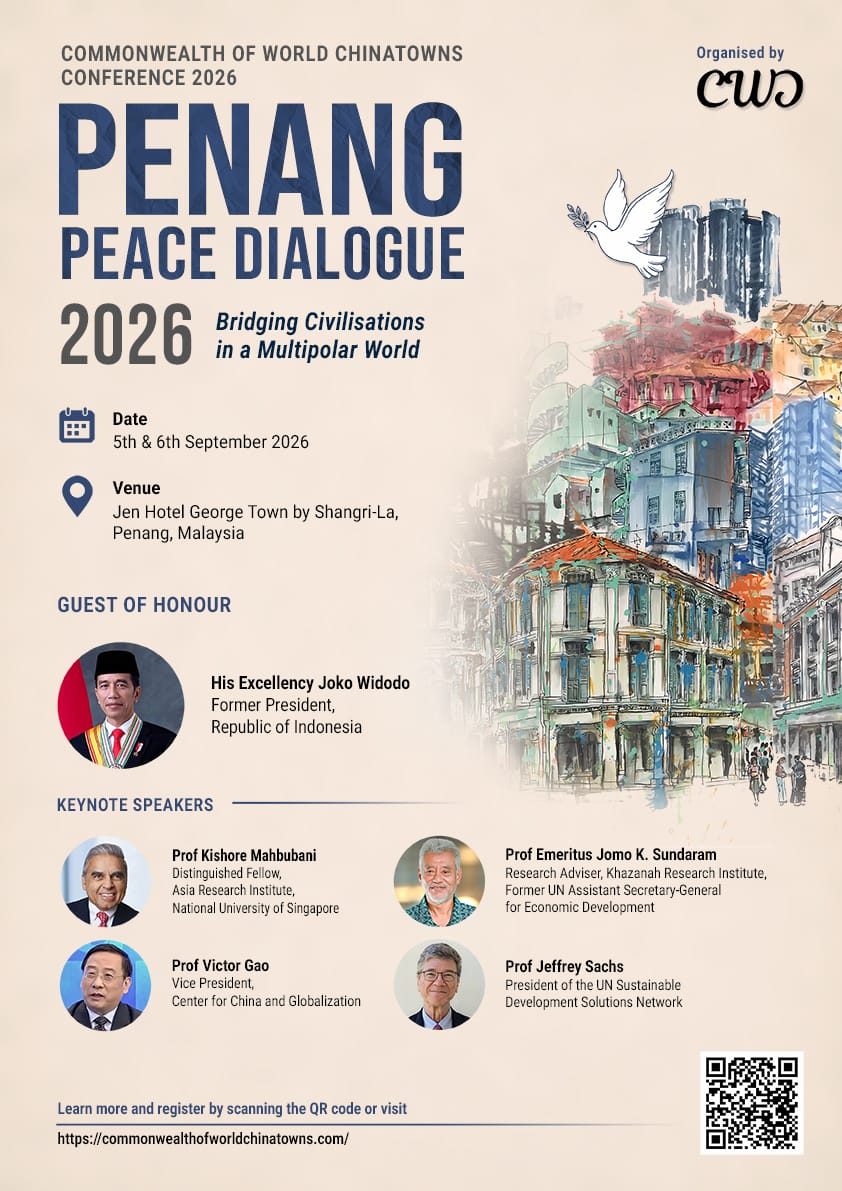
For more information on the Penang Peace Dialogue, click here to visit the official website. Click here to check out the Postscript NAC story, Penang Peace Dialogue: Bridging civilisations in a multipolar world
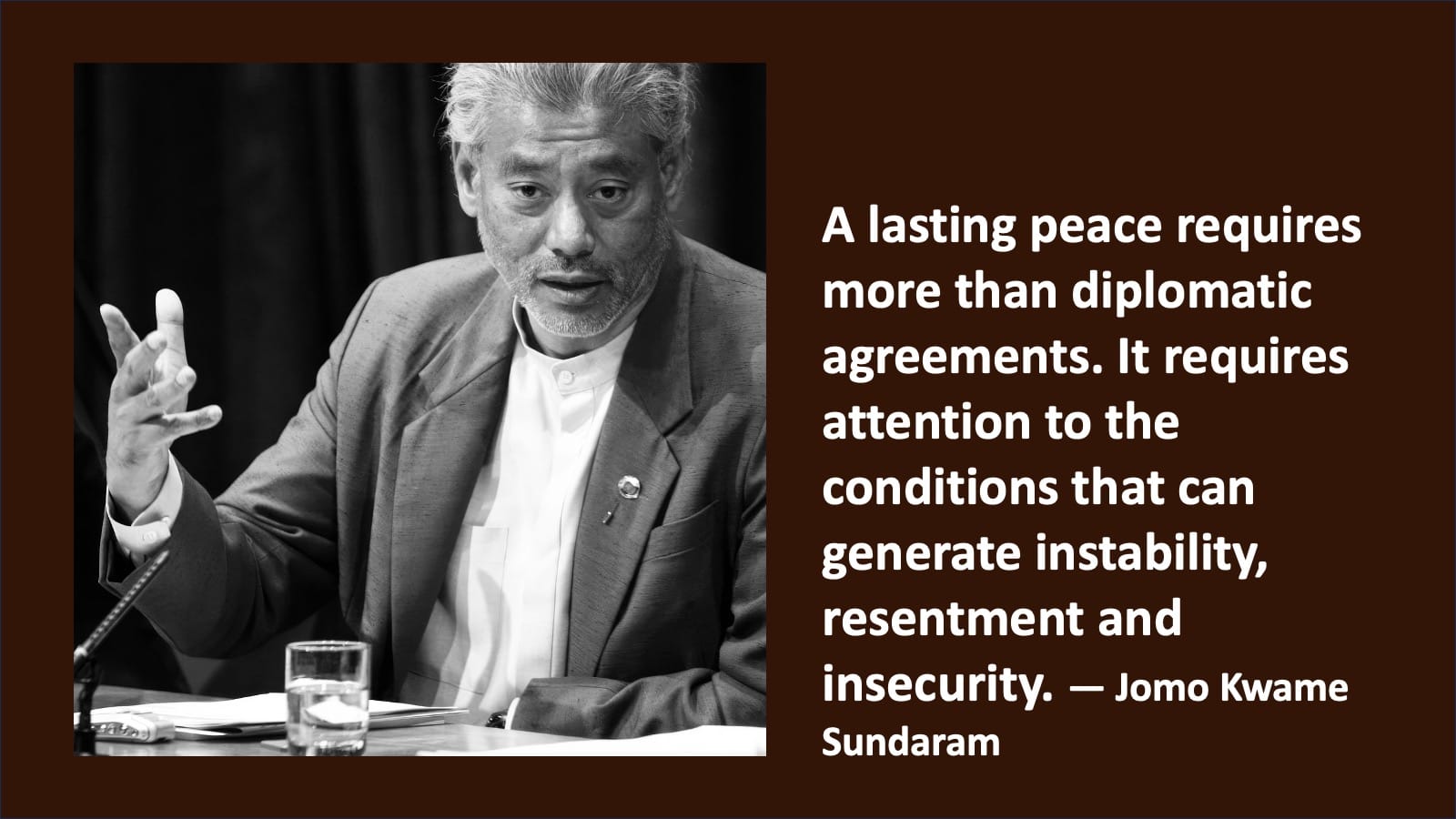
“A lasting peace requires more than diplomatic agreements. It requires attention to the conditions that can generate instability, resentment and insecurity,” he says. This is where ASEAN’s economic and peace roles intersect. If the organisation wants to remain relevant in a changing world, its contribution cannot be limited to managing diplomatic disputes. It must also consider how regional cooperation can contribute to more sustainable and equitable development.
Larger question for ASEAN
The dilemma confronting ASEAN is therefore bigger than the rivalry between Washington and Beijing. It is about whether a regional organisation built on principles of peace, freedom, and neutrality can preserve those principles when its members have increasingly divergent strategic interests.
Jomo’s analysis suggests that ASEAN still has an important role to play, but its effectiveness will depend on whether member states are willing to look beyond immediate national calculations and defend Southeast Asia’s broader interests.
That may be increasingly difficult as external powers compete for influence. Yet abandoning neutrality would carry its own risks. A region that becomes divided along great-power lines could lose the strategic autonomy that has helped ASEAN remain relevant for decades.
The challenge, then, is not for ASEAN to choose between Washington and Beijing. It is to ensure that Southeast Asia does not become a passive participant in a rivalry defined elsewhere. And that challenge cannot be separated from the wider international system.
If ASEAN’s ability to promote peace is constrained by geopolitical pressures, economic inequalities, and competing national interests, the question becomes whether the global institutions created to support peace and cooperation can adapt. That is where the debate moves beyond Southeast Asia—and toward the future of the international peace architecture itself.
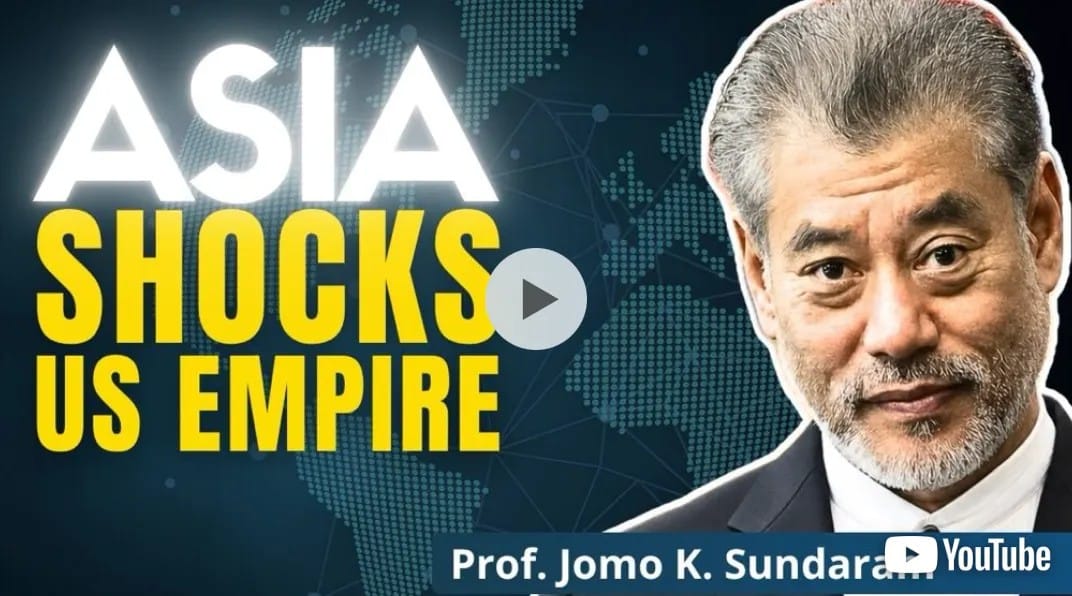
To read Part 2 of the exclusive interview with Professor Emeritus Jomo Kwame Sundaram, click here.